
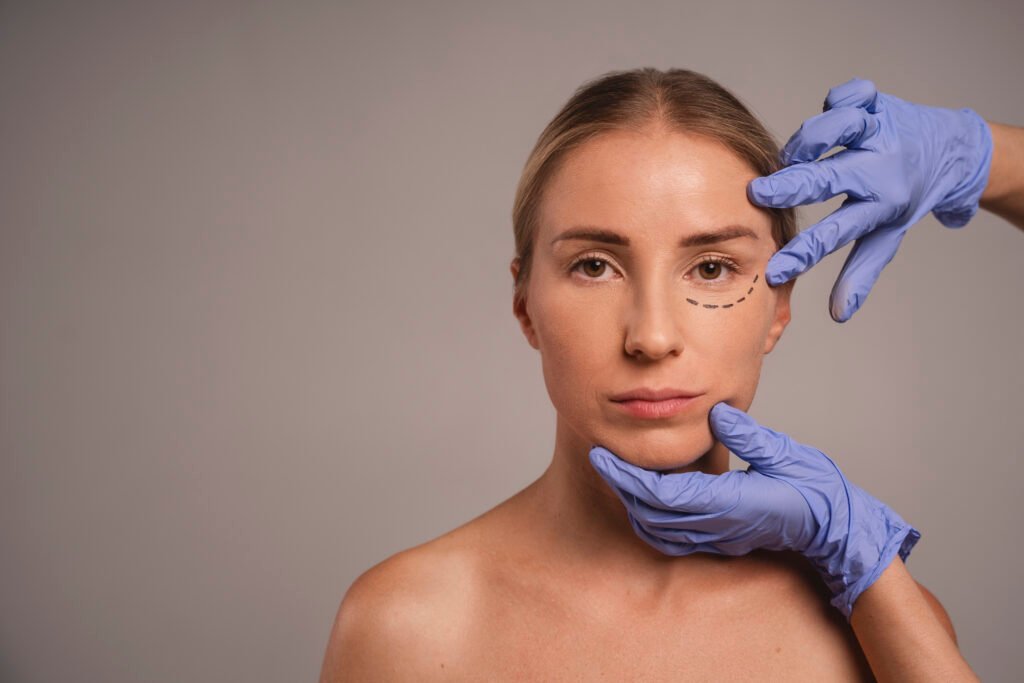
An 8-point facelift is a non-surgical alternative to traditional facelift surgery. Instead of making incisions or tightening the skin, this modern technique uses targeted dermal fillers to restore structure, enhance contour, and lift sagging areas. It focuses on eight key facial points to create a balanced, refreshed look without downtime.
A surgical facelift, on the other hand, involves tightening underlying tissues and repositioning skin through incisions. It delivers dramatic, long-lasting results but requires anaesthesia, recovery time, and carries higher risks.
Clients who want subtle, natural enhancement often choose the 8-point filler lift, while those looking for major correction may prefer surgery. Both options aim to reverse ageing signs, but the level of invasiveness and recovery time differs significantly.
For a medical overview of facelift surgery and more information check out Cleveland Clinic – Facelift Overview.
Risks of an 8-Point Facelift Compared to a Surgical Facelift
Although non-surgical, the 8-point technique still carries some risks. However, the risks are milder and less invasive than those associated with surgery.
Risks of the 8-Point Facelift (Fillers)
Mild swelling or bruising
Temporary tenderness
Asymmetry that can be adjusted
Rare vascular complications (minimised with an expert injector)
Because fillers are reversible and involve no incisions, complications tend to be manageable and short-term.
Risks of a Surgical Facelift
Scarring
Infection
Prolonged swelling and bruising
Nerve injury
Anaesthesia-related complications
Weeks to months of recovery
Surgery provides long-lasting results, but the healing process is significantly longer and more complex.
Learn more about non-surgical lifting treatments.
Aftercare for an 8-Point Facelift
Aftercare for an 8-point facelift is straightforward, and most clients return to normal activity immediately. Proper care helps the fillers settle evenly and ensures natural results.
Recommended Aftercare
Avoid heavy exercise for 24 hours
Stay upright for at least 3–4 hours after treatment
Skip saunas, steam rooms, and hot showers for the first day
Avoid pressure on the treated areas (no facial massage)
Stay hydrated and maintain a gentle skincare routine
Most clients see initial results immediately, with full settling over 7–14 days.
To book treatment or request a consultation click here.
For general information on dermal filler safety visit British College of Aesthetic Medicine – Dermal Fillers Guidance.
