
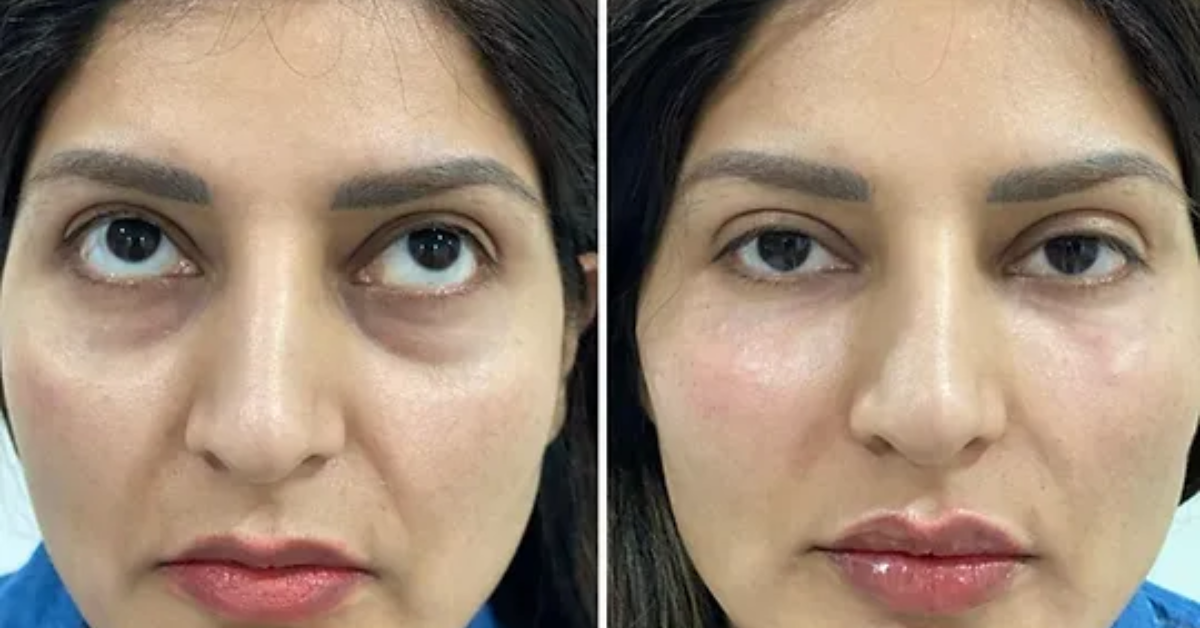
At Deep Aesthetics, many of our patients tell us they feel that their eyes make them look older or more stressed than they actually are. These hollows are known as tear troughs.
Deep tear troughs can make you look tired and aged, but effective treatments can restore a refreshed appearance. To fix deep tear troughs, experts recommend a combination of dermal fillers, skin-boosting treatments, and proper skincare. Hyaluronic acid fillers help restore volume under the eyes, reducing shadows and hollowness.
Complementing fillers with chemical peels, microneedling, or laser treatments also improves skin texture and elasticity. Additionally, maintaining hydration, using targeted eye creams, and protecting skin from sun damage can prevent further deepening.
In this guide, we will walk you through everything you need to know about why these hollows form and how we can help you fix them. Whether you are curious about dermal fillers or the latest regenerative treatments like polynucleotides, we have the answers you need to reclaim your refreshed appearance.
What Are Deep Tear Troughs and Why Do They Form?
Before we look at how to fix deep tear troughs, it helps to understand what they are. The tear trough is the physical depression that runs from the inner corner of your eye down toward your cheek. When this area becomes deep or shadowed, it creates a tired look.
The Anatomy of the Under-Eye Area
The skin under your eyes is the thinnest on your entire body. Beneath this skin lies a complex structure of muscle, fat pads, and bone. There is also a specific ligament called the tear trough ligament. This ligament tethers the skin down to the bone of your eye socket (the orbital rim). As we age, the way these structures interact changes, making the hollow more visible.
Genetics and Your Bone Structure
For some people, deep tear troughs are simply a matter of DNA. You might have had them since your teens. This usually happens because of your natural bone structure. If your mid-face or cheekbones are less prominent, the skin under your eyes has less support. This creates a natural “valley” that looks like a deep shadow.
The Impact of Aging and Fat Loss
Aging is the most common cause of deep tear troughs. As we get older, we naturally lose fat in our faces. The fat pads under the eyes can shrink or shift downward. At the same time, our bodies produce less collagen and elastin. This causes the skin to become thinner and more translucent. When the skin thins, the underlying blood vessels and the tear trough ligament become much more obvious.
Can You Fix Deep Tear Troughs Naturally?
We often get asked if eye creams or lifestyle changes can fix deep hollows. It is important to be honest about what natural methods can and cannot do.
The Role of Sleep and Hydration
Getting more sleep and drinking more water will certainly make your eyes look better. Dehydration makes the skin look sallow and sunken. However, sleep and water cannot replace lost fat or change your bone structure. If your tear troughs are caused by a physical hollow, lifestyle changes will only offer a very slight improvement.
Do Eye Creams Actually Work?
Skincare is essential for maintaining skin quality. Creams containing caffeine can temporarily shrink blood vessels to reduce puffiness. Retinol can help thicken the skin over time. However, a cream cannot “fill” a hollow. Think of it like a pothole in a road; you can paint the road to make it look nicer, but you still need “filler” to make the surface level again.
Top Professional Treatments to Fix Deep Tear Troughs
When you want a real, visible change, professional treatments are the only way to go. At Deep Aesthetics, we specialize in non-surgical options that provide immediate or long-lasting results.
Dermal Fillers: The Classic Choice
Dermal fillers are the most well-known way to fix deep tear troughs. We use a soft, gel-like substance made of hyaluronic acid. This is a sugar molecule that occurs naturally in your body. We carefully place the filler into the hollow to “lift” the skin and smooth out the transition between the eye and the cheek.
Polynucleotides: The Regenerative Future
Polynucleotides are currently one of the most exciting developments in aesthetic medicine. Instead of just “filling” the space, polynucleotides act as food for your cells. They are made from DNA fragments that tell your skin to repair itself. They thicken the skin, improve elasticity, and reduce the blueish tint often seen in deep tear troughs. They are an excellent option for those who want to avoid traditional fillers.
PRF (Platelet-Rich Fibrin)
PRF involves using a small sample of your own blood. We spin the blood in a centrifuge to concentrate the platelets and growth factors. When we inject this back into the tear trough area, it stimulates your body’s own healing process. It is a 100% natural way to improve skin thickness and reduce hollowness over several months.
Dermal Fillers for Tear Troughs: What You Need to Know
If you choose dermal fillers to fix deep tear troughs, you are choosing a treatment with immediate results. However, because the eye area is so complex, the technique matters more than the product.
The Importance of Hyaluronic Acid
We use high-quality hyaluronic acid fillers specifically designed for the periorbital area. These fillers are “light” and don’t attract too much water. If a filler attracts too much water, you can end up with puffy eyes in the morning. Using the right product ensures the result looks smooth and natural.
Needle vs. Cannula
We prefer to use a micro-cannula for tear trough fillers. A cannula is a blunt-ended tube. It is much safer than a needle in this delicate area because it pushes blood vessels aside rather than piercing them. This significantly reduces the risk of bruising and swelling. It also allows us to place the filler precisely along the orbital rim.
How Long Does Filler Last Under the Eyes?
Because there is very little movement in the tear trough area, filler tends to last longer here than in the lips. Most of our patients enjoy their results for 12 to 18 months. Some even find that the results last up to two years.
The Rise of Polynucleotides: A Game-Changer for Under-Eye Hollows
Many people are now moving away from fillers in favor of polynucleotides. If you are worried about looking “puffy” or if you have very thin skin, this might be the better choice for you.
How Polynucleotides Work at a Cellular Level
Polynucleotides are bio-stimulators. They work by increasing the number and activity of fibroblasts. These are the cells responsible for creating collagen and elastin. By injecting these DNA fragments, we are essentially giving your skin the blueprints to rebuild itself. This makes the skin under your eyes thicker and more resilient.
Benefits Over Traditional Fillers
Polynucleotides do not hold water, so there is zero risk of the “puffy eye” look. They also help with pigmentation. If your deep tear troughs are accompanied by dark, brown, or purple circles, polynucleotides help to brighten the skin from within. This creates a much more natural rejuvenation.
The Treatment Course
Unlike filler, which is usually a one-off treatment, polynucleotides require a course. We typically recommend three sessions, spaced about two to four weeks apart. The results appear gradually as your skin heals and thickens.
Choosing the Right Treatment: Filler vs. Polynucleotides
How do you know which one is right for you? It depends on your specific anatomy.
- Choose Filler if: You have a physical “step” or deep hollow and you want an instant change. If you have good skin quality but a deep bone-level hollow, filler is the gold standard.
- Choose Polynucleotides if: Your skin is very thin, “crepey,” or if you struggle with chronic puffiness. It is also the best choice for those who want a completely natural look without adding “volume.”
At Deep Aesthetics, we often combine these treatments. We might use polynucleotides first to thicken and strengthen the skin, followed by a tiny amount of filler to smooth out the final hollow. This “layered” approach often gives the most artistic and long-lasting result.
The Procedure: What Happens During a Tear Trough Treatment?
We want you to feel completely comfortable when you visit us. Here is exactly what you can expect during your appointment to fix deep tear troughs.
Step 1: The Consultation
We start with a detailed face-to-face consultation. We examine your skin, your bone structure, and how your eyes move when you smile. We check for any fluid retention or “bags.” This is the most important step because not everyone is a good candidate for tear trough treatment. If we think a different treatment is better for you, we will tell you honestly.
Step 2: Cleaning and Numbing
We thoroughly cleanse your skin to ensure a sterile environment. We may apply a topical numbing cream, although many of the products we use already contain a local anaesthetic to make the process as comfortable as possible.
Step 3: The Treatment
Using a micro-cannula, we gently place the product into the targeted areas. You might feel a slight pressure or a “tugging” sensation, but it is rarely described as painful. The whole process usually takes about 20 to 30 minutes.
Step 4: Aftercare and Review
We provide you with clear aftercare instructions. We also book you in for a review a few weeks later. This allows us to ensure the product has settled perfectly and that you are thrilled with your new look.
Safety and Risks: Avoiding the Tyndall Effect and Puffy Eyes
The under-eye area is high-risk in the wrong hands. This is why you must choose an expert practitioner who understands facial dynamics.
What is the Tyndall Effect?
The Tyndall effect happens when filler is placed too superficially. The light reflects off the filler, creating a blueish tint under the skin. It can look like a permanent bruise. We avoid this by placing the filler deep beneath the muscle or right against the bone.
Managing Swelling and Bruising
Some mild swelling is normal for 24 to 48 hours. Bruising is less common when we use a cannula, but it can still happen. We recommend avoiding alcohol and blood-thinning supplements like Vitamin E or Fish Oil for a few days before your treatment to minimize this risk.
The Risk of Overfilling
Overfilling is a common mistake. If too much filler is used, it can block the natural lymphatic drainage of the eye. This leads to chronic puffiness. At Deep Aesthetics, we believe “less is more.” We prefer to under-fill and add more later if needed. This ensures you always look natural and never “done.”
Skincare and Lifestyle Adjustments for Tear Troughs
While clinical treatments provide the heavy lifting, your daily habits act as the foundation for your results. If you want to fix deep tear troughs and keep them away, you must look at how you treat your body from the inside out.
Hydration and Nutrition
Water is the most basic building block of skin health. When you are dehydrated, your skin loses its volume and “clings” to the underlying structures, making hollows look much deeper and darker. We recommend a consistent water intake to keep the dermal layers plump.
Nutrition also plays a massive role in neocollagenesis (the creation of new collagen). We suggest focusing on:
- Antioxidant-Rich Foods: Blueberries, leafy greens, and pecans help fight oxidative stress that breaks down elastin.
- Vitamin C: This is a vital co-factor for collagen synthesis. Without enough Vitamin C from citrus fruits or bell peppers, your body cannot effectively repair the delicate under-eye tissue.
- Amino Acids: Foods like bone broth or soy provide the proline and glycine needed to keep skin structural proteins strong.
Targeted Eye Creams and Serums
Skincare cannot “fill” a physical gap, but it can thicken the “curtain” of skin that sits over the hollow. When shopping for serums, we advise looking for these specific high-value entities:
- Retinol: This vitamin A derivative speeds up cell turnover and thickens the dermis over time.
- Peptides: These act as messengers, telling your skin to produce more structural proteins.
- Vitamin C and Ferulic Acid: These brighten the skin and help reduce the “blue” tint caused by visible blood vessels.
- Hyaluronic Acid: This provides surface-level hydration, smoothing out fine “dehydration lines” that often mimic deep tear troughs.
Proper Application Technique: Never rub the skin under your eyes. This is the thinnest skin on your body. Instead, use your ring finger to gently “tap” the product along the orbital rim. This prevents stretching the skin and causing further laxity.
Sleep, Stress, and Sun Protection
Sleep deprivation is the primary “aggravator” of tear troughs. When you lack sleep, your body’s cortisol levels rise, and your circulation slows down. This causes blood to pool under the eyes, creating that dreaded dark shadow.
Furthermore, UV protection is non-negotiable. The sun’s rays are the number one cause of skin thinning. If the skin under your eyes thins out due to sun damage, the deep hollows will become visible much earlier in life. We always recommend a dedicated mineral SPF for the eye area, even on cloudy days in London or Birmingham.
Finally, managing stress is key. Chronic stress leads to inflammation, which degrades the very collagen we work so hard to build during your sessions at Deep Aesthetics.
Tear Trough Treatment Overview at Deep Aesthetics: Why Choose Us?
If you’re ready to move past the tired look and reclaim your confidence, we provide a streamlined, medical-grade experience designed around your comfort. At Deep Aesthetics, we understand that your time is valuable, which is why our precision tear trough treatments are efficient, typically taking between 25 and 40 minutes per under-eye.
We prioritize a stress-free environment, utilizing advanced micro-cannula techniques and localized numbing to ensure there is none to minimal discomfort during the procedure. You won’t have to wait months to see a change; our results are immediate, providing an instant lift to sunken hollows and visibly brightening dark circles.
These results continue to settle and improve over the following 4 weeks as the product integrates perfectly with your natural tissues. Investing in your appearance should offer lasting value, and our under-eye rejuvenation typically remains effective for approximately 12 to 18 months, making it a highly sustainable alternative to expensive, temporary eye creams.
We are also committed to making premium aesthetic care accessible through our current seasonal pricing. You can now book your tear trough treatment from just £495 (previously £595), or opt for a total rejuvenation of the all upper face from £995 (previously £1200). This is a premier opportunity to access the “artistic eye” of our lead practitioners in London, Birmingham, or Nottingham at an exceptional price point.
Our lead practitioner, Deep, is widely recognized for his artistic eye. He understands that the male face and the female face require different injection patterns to maintain their natural character. A good tear trough treatment must look good in motion, not just in a static photo. We use advanced techniques to ensure the filler or polynucleotide integrates perfectly with your natural tissues.
As a medical-led aesthetic clinic, we prioritize your health. We are fully insured and follow strict industry regulations. We provide transparent advice and will never recommend a treatment that isn’t right for you. Our reputation for rectifying poor work from other clinics is a testament to our high level of skill.
Final Expert Tips to Maintain Brighter Eyes
We want to leave you with professional secrets that ensure your results stand the test of time. Fixing deep tear troughs is a journey, not just a single appointment.
- The “Maintenance” Mindset: Don’t wait for the hollows to return completely before booking a review. Small “top-ups” or a single session of polynucleotides every 9 months can keep the area looking consistently fresh.
- Avoid Salt Before Bed: High salt intake causes fluid retention. When the area around a tear trough becomes puffy from salt, the hollow underneath actually looks deeper due to the “shadow effect.”
- Elevate Your Head: If you struggle with morning puffiness, try sleeping with an extra pillow. This encourages lymphatic drainage and prevents fluid from settling in the under-eye space.
- Trust the Professionals: If you have had filler elsewhere and it looks “blue” or “bumpy,” come to us for a corrective consultation. We have extensive experience in dissolving old, poorly placed filler to “reset” the area before starting fresh.
- Wear Sunglasses: It isn’t just about style. Quality sunglasses prevent you from squinting. Frequent squinting overworks the orbicularis oculi muscle, which can contribute to skin laxity and deeper-looking troughs over time.
Conclusion: Take the First Step Toward a Refreshed Look
Fixing deep tear troughs can change how you feel about yourself every time you look in the mirror. You don’t have to look tired when you aren’t. Whether the answer is the immediate lift of a dermal filler or the deep skin health of polynucleotides, we are here to guide you.
At Deep Aesthetics, we combine medical expertise with an artistic touch to give you the natural, rested appearance you deserve. We invite you to visit us in our London, Birmingham, or Nottingham clinics to discuss your bespoke treatment plan.
Ready to brighten your eyes? You can view our full price list online or check our latest special offers to see how we can help you achieve your goals. When you are ready, contact us to book your consultation. We look forward to helping you look and feel your best.
