
Table of Contents
ToggleYou look in the mirror and notice that the dark circles under your eyes aren’t going away, no matter how much sleep you get. You’ve probably heard of tear trough fillers as a “miracle cure” for tired eyes. But because the treatment involves injections so close to your eyes, it’s completely normal to ask: is tear trough filler safe?
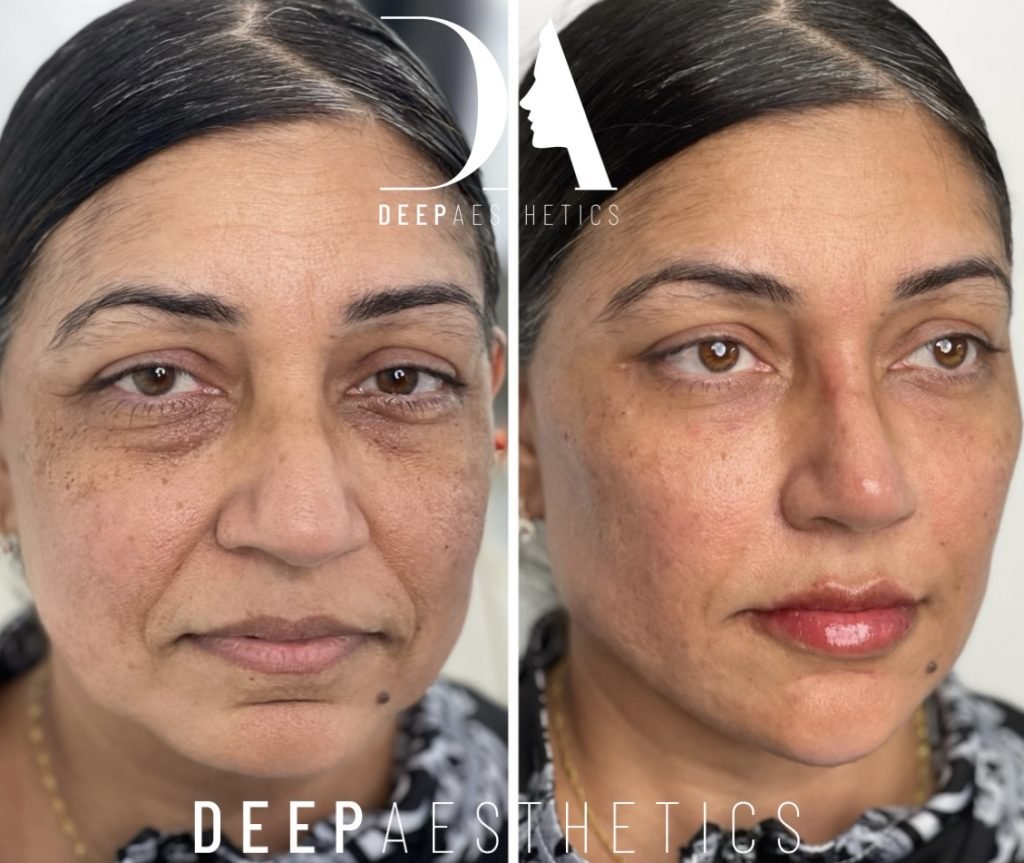
Tear trough filler is generally safe when performed by a qualified and experienced practitioner using approved hyaluronic acid fillers. Most side effects, such as swelling or bruising, are mild and temporary. However, risks like uneven results or rare complications can occur, making proper technique and professional expertise essential for safe and natural-looking outcomes.
At Deep Aesthetics, we understand that your face is your most valuable asset. The under-eye area is one of the most delicate regions of human anatomy. While the results can be life-changing, safety should always be your number one priority.
In this comprehensive guide, we’ll break down the true tear trough filler safety profile, the common under eye filler risks, and why choosing the right practitioner is the difference between a refreshed look and a medical complication.
Is Tear Trough Filler Safe?
The short answer is yes, tear trough filler is safe, provided it is performed by a highly qualified, medically trained professional using the correct products and techniques. In the world of aesthetics, “safety” is a combination of high-quality materials and the skill of the person holding the needle.
While the procedure is common, it is categorized as a high-risk area because of the complex network of blood vessels and nerves around the eyes. Most patients experience only mild tear trough filler side effects like temporary swelling or bruising. However, in the wrong hands, is under eye filler dangerous? It can be. This is why we prioritize education and transparency for every patient who walks through our doors.
What Is Tear Trough Filler?
Before we look at the safety data, we need to understand exactly what we are putting into your skin.
Understanding Tear Troughs
A tear trough is the deep crease that runs from the inner corner of the eye down toward the cheek. As we age, the fat pads in our face shift and the skin thins. This creates a physical hollow. You can learn more about the structural causes in our guide on how to fix deep tear troughs.
How Tear Trough Fillers Work
We use hyaluronic acid fillers to treat this area. Hyaluronic acid is a naturally occurring sugar molecule in your body that keeps your skin hydrated and plump.
- Restores Volume: The filler physically lifts the hollow area so it is flush with the rest of your face.
- Reduces Shadows: By removing the “dip,” we stop the light from casting a shadow, which instantly brightens the under-eye.
How Safe Is Tear Trough Filler Really?
Safety Profile of Hyaluronic Acid Fillers
The vast majority of tear trough treatments use CE-marked hyaluronic acid (HA) fillers. One of the biggest safety nets of HA fillers is that they are completely reversible. If a complication occurs or if you simply do not like the result, a medical professional can inject an enzyme called hyaluronidase to dissolve the filler almost instantly.
Why the Under-Eye Area Requires Expertise
The skin under your eyes is roughly 0.5mm thick, which is about as thin as a piece of paper. Beneath this skin lies a complex anatomy of vessels that supply blood to the eye. A practitioner must have a “Deep” understanding of facial anatomy to avoid these structures. This is not a treatment you should ever seek from an “injector” who lacks formal medical training.
Benefits of Tear Trough Filler
When performed safely, the tear trough filler benefits are significant:
- Reduces Dark Circles: It eliminates the shadows caused by structural hollowness.
- Improves Tired Appearance: You will look more rested and youthful.
- Immediate Results: You walk out of the clinic looking better than when you walked in.
- Non-Surgical: There’s no general anaesthesia, no scalpels, and tear trough filler recovery is typically very fast.
To understand how long your results will last, read our guide on how long does tear trough filler last.
Common Side Effects of Tear Trough Filler
Even when the treatment is perfect, your body will react to the injection. Most tear trough filler side effects are minor and resolve within a few days.
Short-Term Side Effects
- Swelling: Your eyes might look a bit puffy for 24 to 48 hours.
- Bruising: Because the area is so vascular, small bruises are common. These can be easily covered with concealer.
- Redness and Tenderness: The injection sites may feel slightly sore to the touch for a day or two.
Temporary Aesthetic Issues
- Puffiness: Occasionally, if you are prone to fluid retention, the filler can hold onto water in the morning.
- Mild Asymmetry: Swelling rarely happens perfectly evenly. We usually wait two weeks for everything to settle before assessing the final symmetry.
Rare Risks and Complications You Should Know
We believe in being direct about tear trough filler complications. While rare in professional settings, you should be aware of them.
1. Tyndall Effect (Bluish Tint)
If filler is placed too close to the surface of the thin under-eye skin, it can catch the light and create a faint blueish tint. This looks like a permanent bruise. A skilled practitioner avoids this by placing the filler deep, near the bone.
2. Filler Migration
In some cases, filler can move from its original spot. This usually happens if too much product is used or if the wrong type of “heavy” filler is applied to the delicate eye area.
3. Vascular Occlusion (Rare but Serious)
This is the most significant risk. It happens if filler is accidentally injected into a blood vessel, blocking blood flow. Symptoms include intense pain and skin discolouration. At Deep Aesthetics, we are trained to recognize and treat this immediately using dissolving agents. This is why medical expertise is non-negotiable.
Who Should Avoid Tear Trough Filler?
Not Ideal Candidates
- Severe Eye Bags: If your issue is “puffy” bags (fat prolapse) rather than a hollow, filler can actually make the bags look worse.
- Very Thin, Crepey Skin: If your skin has no elasticity, it may not be able to support the weight of the filler.
- Medical Conditions: Those with active skin infections, certain autoimmune issues, or severe allergies to filler ingredients should avoid the procedure.
Importance of Consultation
Every face is different. We provide a personalized assessment to ensure you are a safe candidate. You can view our price list for initial guidance, but a face-to-face meeting is where we confirm if the treatment is right for you.
How to Ensure a Safe Tear Trough Filler Treatment?
1. Choose a Qualified Practitioner
Look for medical professionals (doctors, nurses, or dentists) who specialize in aesthetics. Ask how many tear trough procedures they perform weekly. Experience in this specific area is vital.
2. Use High-Quality Fillers
Only allow the use of premium, CE-marked brands like Teosyal Redensity II, which is specifically formulated for the under-eye area.
3. Proper Injection Technique
We prefer using a blunt-tipped cannula rather than a sharp needle for the majority of the treatment. A cannula is much less likely to pierce a blood vessel, significantly increasing the tear trough filler safety levels.
What to Expect During and After Treatment
Procedure Overview
The treatment takes about 20 to 30 minutes. We apply a numbing cream, clean the area thoroughly, and then use a cannula to place the filler. You might feel a strange “tugging” sensation, but it is rarely painful.
Recovery Timeline
- Day 1-2: Expect some swelling. Use cold compresses and stay hydrated.
- Day 3-5: Any bruising will start to fade.
- Day 14: The filler has fully integrated. This is when you see your final, refreshed result.
Expert Tips for Safe and Natural Results
- Start Conservatively: It is much easier to add more filler in a follow-up session than it is to remove too much. We often recommend “under-filling” slightly to ensure a natural look.
- Avoid Overfilling: Puffy “pillow face” happens when practitioners try to chase every single line. We focus on the structural hollow only.
- Follow Aftercare Strictly: Do not rub your eyes, avoid strenuous exercise for 48 hours, and skip the sauna.
Final Verdict: Is Tear Trough Filler Worth the Risk?
For the vast majority of our patients, the answer is a resounding yes. The boost in confidence that comes from not looking “exhausted” all the time is life-changing. When the risks are managed by a medical expert, the safety profile is excellent.
If you’re tired of being told you “look tired,” we’re here to help. We offer premium care across our clinics in London, Birmingham, and Nottingham.
You can start by checking our latest special offers for exclusive seasonal deals, or review our full price list to ensure complete transparency before your visit. When you are ready to move forward, simply contact us today to book your expert consultation and let our medical team help you achieve the natural results you deserve.
Frequently Asked Questions (FAQs)
1. Are tear trough fillers dangerous?
They are considered a higher-risk aesthetic procedure, but they are not “dangerous” when performed by a medical professional who understands the anatomy and uses the correct safety protocols.
2. How common are complications?
Minor side effects like bruising are very common (about 20-30% of cases). Serious complications like vascular occlusion are extremely rare (less than 0.1%) in professional clinics.
3. Can tear trough filler be reversed?
Yes. Hyaluronic acid fillers can be dissolved within 24 hours using an enzyme called hyaluronidase.
4. Is it safe long-term?
Yes. Hyaluronic acid is naturally metabolized by your body. There is no evidence that long-term use causes issues, provided the area is not chronically overfilled.
5. What happens if filler goes wrong?
If you see an expert, they will have a “complications kit” ready. They can dissolve the filler and manage any issues immediately. For a full pricing overview, see our tear trough filler cost UK guide.
