
Table of Contents
ToggleWhat is non surgical breast enlargement, and can breast size or shape be changed without implants? Clinics online use the term for several different procedures, so understanding exactly what a clinic is offering matters before you book.
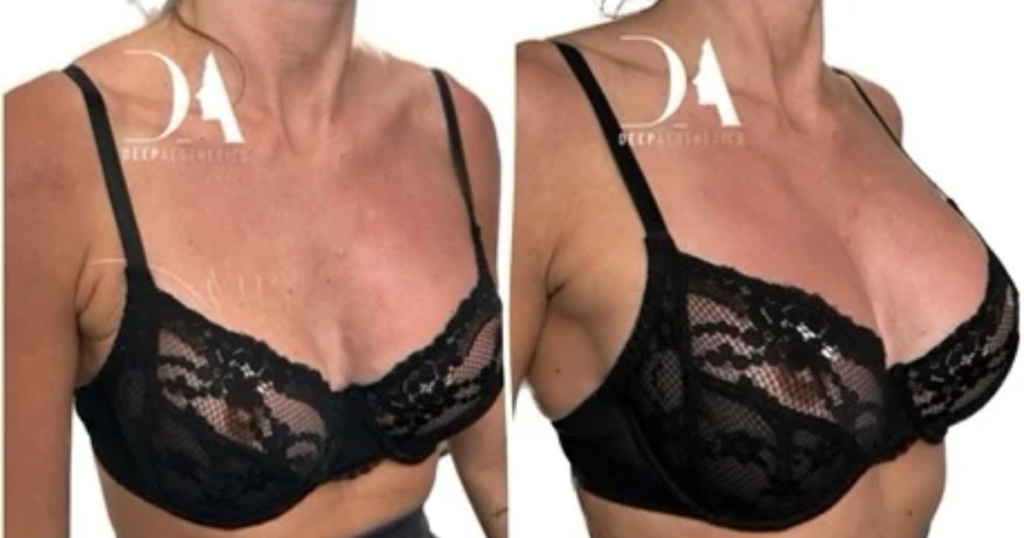
Non surgical breast enlargement is a cosmetic treatment that uses injectable breast filler to add selected volume or improve contour without implants or surgical fat transfer. It may create a modest, temporary change in fullness or symmetry, but it cannot provide every result achievable with breast implants or lifting surgery and still carries medical risks.
Breast fillers, fat transfer, implants and breast lifts differ in the material used, anaesthesia, scarring, achievable volume, longevity, recovery, risks and cost. Fat transfer is still surgery because it involves liposuction and transferring the patient’s own fat, while a breast lift mainly repositions tissue rather than adding substantial volume.
At Deep Aesthetics, breast filler treatment is offered at its London Canary Wharf and Birmingham locations. The dedicated service page currently displays a 200ml package for £1,500, reduced from a previous displayed price of £2,000. The suitable volume and treatment plan depend on individual anatomy, goals, medical history and clinical assessment.
In this guide, we explain how injectable breast fillers work, what they may change, their limitations, how they differ from surgical options, current Deep Aesthetics pricing, recovery, risks and suitability.
What Is Non-Surgical Breast Enlargement?
In the context of Deep Aesthetics, non-surgical breast enlargement refers to an invasive injectable procedure in which breast filler is used to add selected volume or modify contour.
It does not involve placing breast implants, and it does not require fat to be harvested through liposuction. This distinguishes it from fat-transfer breast augmentation, which is a surgical procedure even though it does not use an implant.
It is also different from a breast lift. A lift is intended primarily to reposition and reshape breast tissue and may involve removing excess skin; it is not principally a volume-adding treatment.
Breast filler generally aims to create a more limited or selected change in volume and contour. It should not be presented as a guaranteed alternative to the size change achievable with implants.
How Do Breast Fillers Work?
Breast-filler treatment involves placing an injectable filler according to a personalised plan designed around the patient’s anatomy and treatment goals.
Depending on the assessment, possible goals may include:
- Adding selected fullness
- Improving upper or central breast volume
- Softening visible asymmetry
- Modifying breast contour
- Restoring some volume after ageing or weight change
The Deep Aesthetics website may describe the treatment as using “Bio-Fillers”, but it does not identify a specific product brand, manufacturer, composition or regulatory classification. Until the clinic supplies verified product documentation, it should be described generally as injectable breast filler rather than being linked to a specific brand or product.
The consultation should confirm the proposed product, composition, total volume, intended use, expected duration and management plan for possible complications.
What Can Breast Filler Change?
Injectable breast filler may be considered for a modest change in:
- Breast fullness
- Upper or central volume
- Visible symmetry
- Overall contour
- Proportion between the breasts
- Volume affected by ageing or weight change
The amount of visible change depends on the starting anatomy and the volume that can reasonably be used.
Breast filler cannot guarantee a particular cup-size increase, cleavage or final shape. It does not remove loose skin, replace a breast lift or correct every form of asymmetry.
It may also be unsuitable for someone seeking a substantial and predictable enlargement similar to that often associated with implants. Breast augmentation using implants or surgical fat transfer is designed specifically to increase breast size, while a lift may be needed where significant drooping is the main concern.
Breast Fillers vs Other Breast-Enlargement Options
| Feature | Breast filler | Fat transfer | Breast implants | Breast lift |
| Main material or method | Injectable filler | Patient’s own fat | Silicone or saline implant | Existing breast tissue is surgically reshaped |
| Surgery | No – injectable procedure | Liposuction with fat transfer | Implant surgery |
Breast lift surgery |
| Main goal | Modest volume or contour change | Volume using transferred fat | More substantial volume increase | Repositioning and reshaping |
| Scars | Injection or cannula entry points | Liposuction and transfer incisions | Surgical scars | Surgical scars |
| Typical scale of change | Usually modest | Variable | Generally more predictable larger-volume change | Mainly shape and position |
| Longevity | Temporary and product-dependent | Some transferred fat may remain long term | Long-lasting devices, but not lifetime devices | Long-lasting, although ageing continues |
| Recovery | Usually shorter than surgery, but not zero | Post-operative recovery | Implant surgery recovery | Breast-lift recovery |
| Main limitations | Temporary, volume limits and filler-related risks | Requires donor fat and has variable fat survival | Surgical and implant-related risks | Does not primarily add volume |
Breast implants and fat transfer are recognised surgical breast-augmentation methods. Breast augmentation alone does not reliably correct severe drooping, which may require a breast lift.
No option is universally best or safest. The appropriate route depends on the desired amount of change, health, anatomy, available donor fat, willingness to undergo surgery, recovery expectations and individual risks.
What Happens During Breast-Filler Treatment?
The exact appointment varies according to the proposed product, treatment volume and clinical protocol. A general patient journey may include:
- Consultation and medical-history review
- Assessment of breast anatomy, contour, asymmetry and goals
- Discussion of the proposed product, volume, limitations and risks
- Review of breast-health and screening history
- Preparation and appropriate pain management
- Controlled filler placement by the treating professional
- Immediate assessment and aftercare guidance
- Follow-up when clinically appropriate
Appointment length and discomfort vary according to the product, treatment volume, individual plan and response.
Before proceeding, the patient should understand what product is being used, how much is proposed, what changes are realistic and how the clinic would respond to a complication.
What Results Can You Expect?
Early changes may include increased fullness, a rounder contour, greater upper-breast volume or an improvement in visible symmetry.
However, swelling can temporarily affect the appearance, so the result should not be judged immediately.
Results vary, and breast-filler effects are temporary. Their duration depends on the exact product, treatment volume, individual metabolism and the patient’s treatment plan. The FDA notes more generally that filler duration depends on the filler material, the area treated and the volume used.
More filler is not automatically better or safer. Maintenance or correction may eventually be required, while natural ageing, weight change and ongoing changes in breast tissue can affect the appearance over time.
Complete or straightforward reversal should not be guaranteed. Depending on the material, filler reduction or removal may require injections, surgery or other interventions, and some materials can be difficult or impossible to remove completely.
Recovery and Possible Side Effects
Non-surgical does not mean there is no recovery.
Possible short-term effects after filler injections may include:
- Swelling
- Bruising
- Redness
- Tenderness
- Firmness
- Entry-point discomfort
- Temporary unevenness while swelling settles
Swelling, bruising and redness are recognised general filler reactions, and delayed side effects may also appear weeks, months or years after an injection.
Patients should follow the aftercare guidance supplied by their treating clinic and report symptoms that are worsening rather than gradually settling.
The exact time needed before returning to work, exercise or other activities should be confirmed individually. It should not be assumed that every patient will have no downtime.
What Are the Risks of Breast Fillers?
Breast filler is an invasive injectable procedure and can cause complications.
Possible risks include:
- Infection or abscess
- Persistent pain or swelling
- Lumps or nodules
- Filler migration
- Uneven contour
- Inflammatory or allergic reactions
- Vascular injury or blockage
- Skin or tissue damage
- Delayed complications
- Difficulty reducing or removing filler
- Need for injectable, radiological or surgical correction
- Permanent contour changes or scarring in severe cases
With fillers generally, unintended injection into a blood vessel is one of the most concerning complications because blocked blood supply can result in tissue death and other serious or permanent harm.
The FDA advises against using injectable fillers to increase breast size in the United States. While this reflects US regulatory guidance rather than UK law, it highlights why patients should confirm the specific product, its intended use and its UK regulatory position before proceeding. Clinics should not market any procedure as completely safe simply because it avoids implants or general anaesthesia.
Anyone who experiences severe or rapidly worsening pain, unusual skin-colour changes, breathing difficulty, collapse, significant neurological symptoms or signs of a serious infection should seek urgent medical assessment immediately.
Breast Screening and Medical History
As a practical precaution, anyone who has undergone injectable breast augmentation should disclose it to their GP, breast-screening service, radiologist, breast surgeon and any professional assessing a new breast symptom.
Fillers can produce delayed lumps, swelling, inflammatory changes or other complications, so healthcare professionals need an accurate procedure and product history when evaluating the breasts. This recommendation is an inference based on recognised delayed filler effects and the potential need for imaging or surgical correction.
Having breast filler does not mean routine breast screening should be avoided. Patients should continue to follow the screening or diagnostic advice given by their healthcare professionals.
A new breast lump, nipple change, skin change, discharge or unexplained pain should be medically assessed. It should not automatically be assumed to be a normal filler effect.
Who May Not Be Suitable?
Treatment may need to be postponed or avoided for someone with:
- Active infection or damaged skin
- An unexplained breast lump or symptom that has not been assessed
- A known allergy relevant to the proposed product
- A previous serious filler complication
- A bleeding or clotting disorder
- Certain immune or healing conditions
- Relevant medicine use
- Pregnancy or breastfeeding
- Active breast disease or an ongoing investigation
- Expectations that cannot reasonably be achieved
- Body-image concerns requiring further assessment
- An inability to attend follow-up or comply with aftercare
This is not a complete contraindication list.
Patients should disclose their medical history, medicines, allergies, previous breast operations, previous filler procedures, screening history and relevant personal or family breast-health concerns.
How Much Does Non-Surgical Breast Enlargement Cost at Deep Aesthetics?
The dedicated Deep Aesthetics breast-filler page currently displays the following pricing:
| Deep Aesthetics breast-filler option | Displayed volume | Displayed price |
| Current breast-filler special offer | 200ml | £1,500 |
| Previous price displayed | 200ml | £2,000 |
The £1,500 amount is the current special-offer price shown on the service page, while £2,000 is presented as the previous price.
The page does not clearly state whether 200ml is the total treatment volume or the amount allocated to each breast. It should not be described as “200ml per breast” without written confirmation from the clinic.
Not every patient will require or be suitable for 200ml. Prices and offers may change, and final volume, suitability and quotation should be confirmed during consultation.
Breast-Filler Treatment at Deep Aesthetics
At Deep Aesthetics, injectable breast filler described on the website as using “Bio-Fillers” is offered at the clinic’s London Canary Wharf and Birmingham locations. The website does not identify a specific product manufacturer, composition or regulatory classification. The dedicated page currently displays a special price of £1,500 for 200ml, reduced from a previous displayed price of £2,000.
Treatment planning should consider breast anatomy, the change being requested, medical and breast-health history, the proposed product, total volume, limitations and possible complications.
Before treatment is agreed, the clinic should confirm the precise filler product, how the displayed volume is allocated and what follow-up or complication support is included.
An individual consultation is necessary to determine whether injectable breast filler is appropriate and whether the requested result can reasonably be achieved.
Conclusion: Is Non-Surgical Breast Enlargement Right for You?
Non surgical breast enlargement uses injectable breast filler to create a modest, temporary change in breast volume or contour without implants or surgical fat harvesting.
Deep Aesthetics currently offers injectable breast filler at its London and Birmingham locations. The treatment may add selected fullness or improve visible symmetry, but it cannot provide every result possible with breast implants or a breast lift.
It also carries recognised risks, including infection, nodules, migration, vascular injury and the possibility that correction or removal may be difficult.
An individual consultation should confirm the exact product, proposed volume, realistic result, price, breast-health considerations and complication plan before a treatment decision is made.
Disclaimer: This article is for general informational purposes only and does not constitute medical advice. Injectable breast-filler procedures carry risks, and suitability, products, treatment volume, results, prices, recovery and complications vary between individuals. Prices and promotional offers may change. An individual assessment with an appropriately qualified healthcare professional is required before treatment.
Frequently Asked Questions
What is non-surgical breast enlargement?
Non-surgical breast enlargement commonly refers to using injectable breast filler to create a modest and temporary change in breast fullness or contour without placing implants or surgically harvesting fat. It remains an invasive medical procedure and involves potential side effects, complications and limitations.
How much bigger can breast filler make the breasts?
There is no cup-size increase that can be guaranteed. The visible change depends on breast anatomy, skin and tissue characteristics, the proposed filler and the volume used. Breast filler generally aims to produce a modest change in fullness or contour rather than the larger-volume enlargement often associated with implants.
How long do breast fillers last?
There is no single duration that applies to every breast-filler treatment. Longevity depends on the exact filler material, treatment volume, patient metabolism and individual plan. Maintenance may be required, but a reliable estimate should only be given after the exact product has been confirmed.
Is non-surgical breast enlargement safe?
It carries recognised risks, including infection, nodules, migration, vascular complications, tissue injury and difficulty removing the filler. Appropriate product disclosure, medical assessment, informed consent, breast-health consideration and a clear complication-management plan are required before treatment.
How much is breast filler at Deep Aesthetics?
The dedicated Deep Aesthetics page currently displays 200ml of breast filler for £1,500, reduced from a previous displayed price of £2,000. The page does not clearly state how the 200ml is divided, so final volume allocation and price should be confirmed during consultation.
