
Table of Contents
ToggleMorpheus8 can be uncomfortable, but it should not normally be described as unbearable. Most patients receive topical numbing before treatment, and research on radiofrequency microneedling generally describes pain as mild to moderate and well tolerated. The sensation varies with treatment depth, energy settings, body area and individual pain sensitivity.
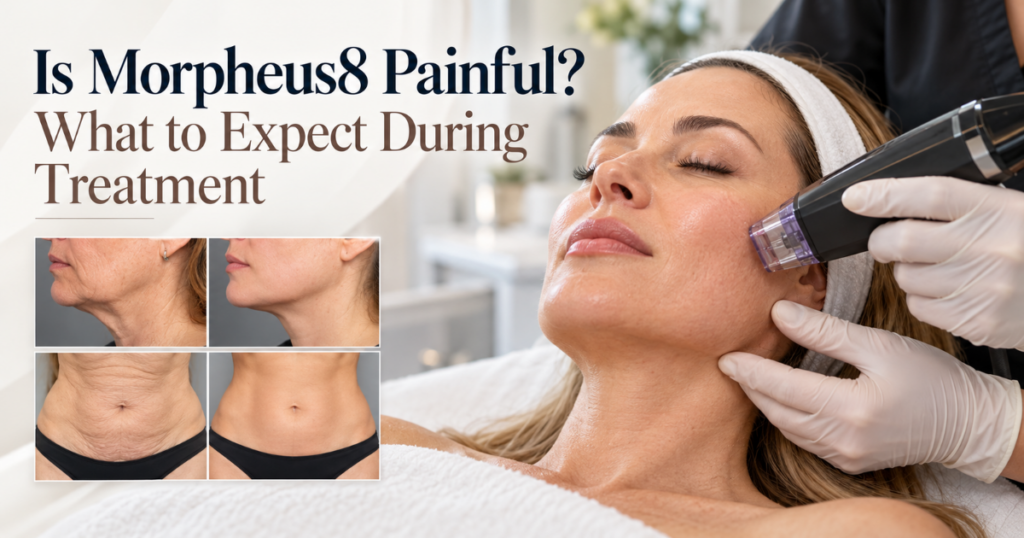
Morpheus8 combines microneedles with radiofrequency energy. That means you may feel both the mechanical sensation of needles entering the skin and warmth as RF energy is delivered into selected tissue.
At Deep Aesthetics, Morpheus8 treatment is planned according to the area being treated and individual suitability, rather than assuming every patient will experience the procedure in exactly the same way.
Understanding what produces the discomfort—and what happens before, during and after treatment—can make the experience much easier to evaluate realistically.
What Does Morpheus8 Feel Like?
Patients commonly describe Morpheus8 as a combination of pressure, prickling, warmth and short bursts of sharper discomfort.
The device uses small needles to enter the skin and deliver fractional radiofrequency energy at controlled depths. The exact sensation changes depending on where the handpiece is placed.
Areas with thicker tissue may feel different from thinner or more sensitive facial areas. The experience can also change during the same appointment because different settings may be used across different anatomical regions.
Deep Aesthetics’ existing Morpheus8 treatment page describes the treatment as involving some discomfort rather than being completely pain-free.
That is a more realistic expectation than promising that you will feel nothing.
Why Can Morpheus8 Hurt?
There are two main reasons.
First, microneedling physically penetrates the skin. Even very fine needles can produce a sharp or prickling sensation.
Second, radiofrequency produces controlled heat within the tissue. This thermal energy is an important part of RF microneedling, but patients may perceive it as warmth, heat or a brief stinging sensation.
The combination means Morpheus8 usually feels more substantial than a superficial facial treatment.
However, radiofrequency microneedling is designed as a controlled procedure rather than an uncontrolled injury. A recent systematic review of facial RF microneedling found pain was generally mild to moderate and treatments were well tolerated across the included studies.
Does Numbing Cream Make Morpheus8 Less Painful?
Yes. Topical anaesthetic is commonly used before Morpheus8 to reduce treatment discomfort.
Deep Aesthetics’ existing guide to how Morpheus8 works describes topical numbing cream being applied before treatment.
Research involving aesthetic microneedling procedures also supports topical anaesthesia as a useful method of reducing pain. One controlled study found substantially lower pain scores when topical anaesthetic delivery was enhanced before a needling-based procedure.
The exact numbing protocol may vary according to treatment area and practitioner assessment.
You should not apply additional anaesthetic products yourself unless specifically instructed, because inappropriate application or excessive doses can also create risks.
Which Areas of Morpheus8 Treatment Hurt More?
Pain cannot be predicted solely from the name of the treatment area, but thinner or more sensitive areas may feel more noticeable than areas with greater soft-tissue coverage.
Commonly treated areas can include:
- cheeks,
- lower face,
- jawline,
- neck,
- abdomen,
- arms,
- and other selected body areas.
Depth and RF settings may also differ according to the anatomical target.
For example, a treatment intended mainly for superficial skin texture may use different parameters from one intended to address deeper tissue. The deeper or more intensive procedure is not automatically more painful, but it can change the sensation.
The most useful comparison therefore comes from the actual treatment settings and area, not from somebody else’s experience on social media.
How Painful Is Morpheus8 on a 1–10 Scale?
There is no scientifically reliable single Morpheus8 pain score that applies to everyone.
Pain scales are subjective. A sensation one person rates 3/10 may be rated 6/10 by another.
Differences can include:
- individual pain threshold,
- anxiety,
- treatment depth,
- RF energy,
- treatment area,
- number of passes,
- anaesthetic effectiveness,
- and previous experience with aesthetic procedures.
Published research is more useful when interpreted broadly: radiofrequency microneedling tends to produce mild-to-moderate pain rather than being genuinely painless.
Any clinic promising that every patient will feel absolutely nothing would therefore be setting an unrealistic expectation.
Is Morpheus8 More Painful Than Ordinary Microneedling?
It can feel different because Morpheus8 adds radiofrequency heat to the mechanical needling process.
Traditional microneedling primarily creates controlled needle channels.
Morpheus8 combines those needles with RF energy delivered into tissue, so patients may notice additional warmth or short pulses of heat.
However, direct comparisons are difficult because conventional microneedling devices, RF microneedling devices, depths, anaesthetic protocols and treatment settings vary considerably.
Rather than choosing treatment according to which sounds least painful, the more useful question is which procedure appropriately matches the skin concern being treated.
Is Morpheus8 Painful Around the Jawline and Neck?
The lower face, jawline and neck are common Morpheus8 treatment areas.
Some patients may find parts of these regions more sensitive because tissue thickness and underlying anatomy vary across the treatment field.
Morpheus8 has also been studied alongside radiofrequency-assisted procedures for lower-face and neck laxity, with research assessing both outcomes and patient-reported pain.
A practitioner can adjust treatment planning according to anatomy, but this does not mean discomfort can be completely eliminated.
Short periods of stronger sensation may still occur during treatment.
Does Morpheus8 Hurt After the Treatment?
Tenderness, warmth or mild soreness can occur after Morpheus8, but post-treatment discomfort is generally different from the sensation during the procedure itself.
Radiofrequency microneedling research commonly reports temporary reactions such as:
- redness,
- mild swelling,
- tenderness,
- warmth or burning sensation,
- dryness,
- rough texture,
- and occasional pinpoint crusting.
A systematic review found the most commonly reported adverse effects were erythema and oedema, with these typically being mild and temporary.
A Morpheus8-specific facial study also monitored redness, swelling, dryness, peeling, stinging, tingling, itching and burning during the week after treatment.
How Long Does Morpheus8 Soreness Last?
There is no universal timetable.
For many patients, the initial heat or tenderness decreases relatively quickly, while redness, swelling or skin roughness may remain visible for several days.
The exact recovery depends on the treatment intensity, area, skin response and individual healing.
Increasing pain is different from expected mild soreness.
If discomfort becomes progressively worse rather than gradually improving—particularly if accompanied by blistering, spreading redness, discharge or significant swelling—you should contact the treating clinic for assessment.
Can Morpheus8 Be Too Painful to Continue?
Yes, individual tolerance differs.
If treatment becomes significantly more uncomfortable than expected, tell the practitioner rather than trying to tolerate severe pain silently.
Pain can provide useful information.
The practitioner may need to pause, reassess the area, review the numbing effect or consider whether treatment parameters should be changed.
Aesthetic treatment should not become an endurance test.
Is Morpheus8 Worth It if You Have a Low Pain Tolerance?
A low pain tolerance does not automatically mean you cannot have Morpheus8.
It does mean the discussion before treatment becomes more important.
Consider:
| Question | Why it matters |
| How will discomfort be managed? | Helps establish realistic expectations |
| How long will numbing be applied? | Anaesthesia can affect tolerability |
| What area is being treated? | Sensitivity differs by anatomy |
| What depth will be used? | Settings influence treatment sensation |
| Can treatment pause if needed? | Important for patient comfort |
| What should I expect afterwards? | Separates normal soreness from warning symptoms |
If your primary concern is skin tightening or texture, understanding how Morpheus8 works can also help you decide whether the expected treatment experience matches the potential benefit you are seeking.
Is Morpheus8 Available in London and Birmingham?
Yes. Deep Aesthetics currently offers Morpheus8, with consultations available at:
London: Mirror Works, 12 Marshgate Lane, Stratford, London E15 2NH
Birmingham: 25 King Edwards Wharf, Sheepcote Street, Birmingham B16 8AB
The current Deep Aesthetics Morpheus8 service information lists treatment from £650 per session, with a course option also displayed.
Pricing and treatment planning should be confirmed at consultation because suitability and the area being treated can affect the recommended plan.
Frequently Asked Questions
Is Morpheus8 extremely painful?
Usually it is better described as uncomfortable rather than extremely painful. Research on RF microneedling generally reports mild-to-moderate, tolerable pain. Individual experience varies considerably according to area, treatment parameters, topical anaesthetic and personal sensitivity.
Do you get numbing cream before Morpheus8?
Topical anaesthetic is commonly used before Morpheus8 to improve comfort. The exact product, application time and anaesthetic protocol should be determined by the treating clinic rather than applied independently by the patient.
What does Morpheus8 feel like?
Patients may experience pressure, prickling, warmth and short bursts of heat or stinging as the microneedles and RF energy are delivered. The sensation can change across different parts of the same treatment area.
Is the pain worse after Morpheus8?
Most expected post-treatment discomfort is mild and temporary. Tenderness, warmth and sensitivity may accompany redness or swelling. Severe or progressively worsening pain should be reviewed by the treating clinic rather than assumed to be normal.
Can I take painkillers before Morpheus8?
Do not take medication specifically for a procedure without discussing it with the treating practitioner. Some medicines may affect bleeding, bruising or medical suitability. Your clinic should provide personalised pre-treatment instructions based on your health and medication history.
Final Thoughts: Is Morpheus8 Painful?
Morpheus8 is not completely pain-free, but current RF microneedling evidence suggests that treatment discomfort is generally mild to moderate and well tolerated.
Topical numbing can make the procedure more manageable, while the actual sensation varies according to treatment depth, RF settings, area and personal pain threshold.
The best preparation is realistic expectation: you may feel needling, pressure and heat, and some tenderness or warmth can continue after treatment.
At Deep Aesthetics, Morpheus8 consultations are available in Stratford, London and Birmingham, where suitability, treatment area, expected sensation, recovery and potential risks can be discussed before proceeding.
Individual experiences vary, and no treatment can be guaranteed to be painless.
Disclaimer: This article is for general educational purposes and does not constitute medical advice. Pain tolerance, anaesthetic requirements, treatment settings and recovery differ between patients. Any significant or worsening symptoms after treatment should be discussed with your treating practitioner.
