
Table of Contents
ToggleCO2 laser treatment is an ablative skin-resurfacing procedure that uses carbon dioxide laser energy to remove controlled areas of damaged outer skin and heat the tissue beneath. This healing response supports collagen remodelling and may improve acne scars, fine lines, sun damage and uneven skin texture.
Treatment intensity affects the likely result, recovery, price and risk. Fractional and fully ablative CO2 treatments are not identical, and suitability depends on your skin type, concern, medical history and tolerance for downtime.
At Deep Aesthetics, CO2 laser treatment is available at its London Canary Wharf and Birmingham clinics, with small-area treatment starting from £300. The dedicated page currently lists small-area treatment from £300, while the treatment type and settings should be matched to the individual.
In this guide, we explain how CO2 laser works, what it may help with, fractional versus fully ablative treatment, results, cost, downtime, risks and suitability.
What Is CO2 Laser Treatment?
CO2 stands for carbon dioxide, the gas used as the lasing medium that produces the beam. Cosmetic CO2 laser resurfacing is ablative, meaning it removes controlled portions of the skin’s surface rather than only heating deeper tissue.
It differs from laser hair removal, intense pulsed light and non-ablative facial lasers. Those technologies use different energy or wavelengths and target different structures.
How Does CO2 Laser Treatment Work?
Medical CO2 lasers commonly emit energy at about 10,600 nanometres. Water within the skin absorbs this energy, allowing the laser to ablate controlled areas of the epidermis, the outer skin layer.
Heat also reaches the dermis below. This starts a wound-healing response and supports collagen contraction and remodelling. As the surface heals and collagen reorganises, skin texture and appearance may gradually improve.
The depth, density and energy can be adjusted, so treating a small scar is not equivalent to intensive full-face resurfacing.
Fractional vs Fully Ablative CO2 Laser
Fractional CO2 laser divides the beam into microbeams that create microscopic treatment columns while leaving surrounding skin untreated. Those untreated areas help support healing.
Fully ablative CO2 laser treats the selected surface more uniformly and generally involves a more intensive recovery and different risk profile.
The appropriate approach depends on the concern, skin tone, treatment area, settings and acceptable downtime. The guide to choosing the best CO2 laser treatment covers these selection factors in more detail.
What Can CO2 Laser Treatment Help With?
CO2 laser resurfacing may help reduce the appearance of:
- Mild to moderate acne scarring
- Fine lines and wrinkles
- Uneven skin texture
- Sun-damaged skin
- Age spots or uneven-looking colour
- Rough-looking skin
- Selected superficial scars
Laser resurfacing is commonly used for fine wrinkles, age spots, uneven texture or colour, sun damage and mild to moderate acne scars.
The likely improvement depends on the type and severity of the concern. CO2 laser does not remove every scar or cure every pigmentation problem.
It mainly addresses skin quality and surface changes. It does not replace dermal fillers for volume loss or surgery when significant laxity is the main concern. Mayo Clinic notes that laser resurfacing cannot correct sagging skin.
What Happens During Treatment?
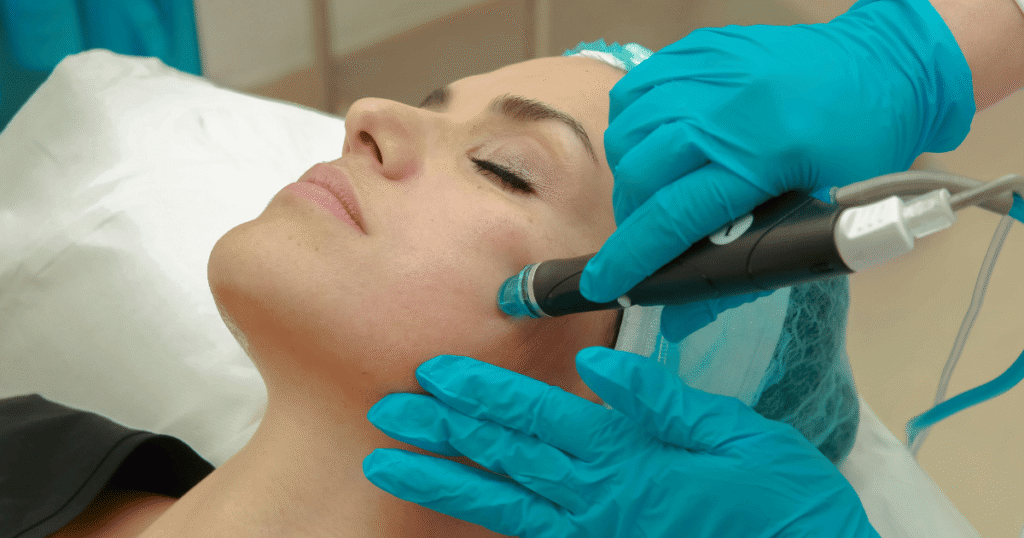
The process usually begins with a consultation and medical-history review. The practitioner assesses your skin type, concern, healing history and the treatment area.
A typical appointment may involve:
- Consultation and medical-history review
- Assessment of skin type and the treatment area
- Cleansing and appropriate numbing or anaesthesia
- Protective eyewear
- Controlled laser application
- Personalised aftercare instructions
Protective eye equipment is required during CO2 laser procedures, while the method of pain control depends on the area and treatment intensity.
A small fractional procedure will not involve the same approach as extensive ablative resurfacing.
What Results Can You Expect?
Possible results include smoother-looking texture, a softer appearance of selected scars or lines and more even-looking skin.
Some changes appear as the surface heals, while collagen remodelling may continue over the following months. Results differ between people, and some patients need more than one session. Fractional procedures often require multiple treatments, depending on the concern and treatment plan.
Improvements may remain visible for years, but natural ageing and further sun exposure continue and can affect the result over time.
CO2 Laser Downtime and Recovery
There is no single downtime for every patient. Recovery depends on whether treatment is fractional or fully ablative, the depth and density used, the area and individual healing.
Expected temporary effects may include redness, swelling, warmth or burning, peeling, crusting, itching and sensitivity.
Initial healing
As a general medical range, new skin may cover an ablatively treated area in around 7–10 days. This does not mean every visible effect will have settled.
Social downtime and persistent redness
Redness, swelling, peeling or crusting may affect when you feel ready to return to work or social events. Pinkness or redness can continue after the surface has healed, especially after more intensive treatment.
Full recovery
Full recovery after ablative resurfacing can take a month or longer. Follow your personalised aftercare instructions and protect healing skin from avoidable sun exposure.
Is CO2 Laser Treatment Safe?
Redness, swelling, itching, warmth and discomfort can be part of normal early recovery. Possible complications include:
- Prolonged redness or inflammation
- Bacterial, viral or fungal infection
- Cold-sore reactivation
- Acne or milia
- Hyperpigmentation
- Hypopigmentation
- Delayed healing
- Scarring
These risks are recognised with laser resurfacing, particularly with ablative approaches.
Brown and Black skin can have a higher risk of long-lasting pigment changes after ablative resurfacing. This does not mean darker skin can never be treated, but suitability, settings and alternatives require careful assessment by someone experienced with different skin tones.
Who May Not Be Suitable?
Treatment may need to be postponed or avoided if you have an active infection, open wound or cold-sore outbreak in the area.
Other relevant factors include certain healing or immune conditions, a history of abnormal or keloid scarring, current or recent medicines, recent procedures, pregnancy or breastfeeding.
This is not a complete list. Disclose your full medical history, medicines and previous cosmetic treatments before a plan is agreed.
How Much Does CO2 Laser Treatment Cost at Deep Aesthetics?
At Deep Aesthetics currently displays the following CO2 laser prices across its dedicated treatment page and main price list.
| Deep Aesthetics listing | Treatment option | Price |
| Dedicated CO2 service page | Small area — single treatment | £300 |
| Dedicated CO2 service page | Small area — course of 3 | £750 |
| Dedicated CO2 service page | Small area — course of 6 | £1,500 |
| Dedicated CO2 service page | Full-face CO2 package currently displayed | £1,500 |
A small treatment area may include a small scar or an area such as the upper lip. The dedicated service page and main price list display different figures because they may refer to different treatment areas, intensities or packages; the amounts should not be treated as interchangeable.
Prices and promotional offers may change. For further pricing context, see the guide to CO2 laser treatment cost in the UK and confirm the price for your recommended treatment area during consultation.
CO2 Laser Treatment at Deep Aesthetics
At Deep Aesthetics, CO2 laser treatment is listed among the clinic’s energy-based procedures, with London Canary Wharf and Birmingham locations shown on the website.
A consultation should consider your concern, skin type, medical history, treatment intensity and recovery expectations. It is also the right time to confirm pricing because the dedicated treatment page and main price list display different starting figures for different plans.
Frequently Asked Questions
Q1. What is CO2 laser treatment?
Answer: CO2 laser treatment is an ablative skin-resurfacing procedure. Carbon dioxide laser energy removes controlled areas of outer skin and heats the tissue below. The healing response may improve selected concerns such as acne scars, fine lines, sun damage and uneven texture.
Q2. How does CO2 laser treatment work?
Answer: The laser energy is absorbed by water in the skin. It ablates controlled areas of the epidermis and creates heat in the dermis, starting healing and collagen remodelling. Treatment depth and density are adjusted according to the concern and plan.
Q3. What is the difference between fractional and fully ablative CO2 laser?
Answer: Fractional treatment creates microscopic columns separated by untreated skin. Fully ablative treatment resurfaces the selected area more uniformly. They therefore differ in intensity, recovery, possible risks and the number of sessions that may be recommended.
Q4. How long is CO2 laser downtime?
Answer: Initial surface healing may take around 7–10 days, but redness and sensitivity can continue. More intensive treatment may require a month or longer for full recovery. Actual downtime depends on treatment type, settings, area and individual healing.
Q5. Is CO2 laser suitable for darker skin?
Answer: It may be possible, but brown and Black skin can have a higher risk of post-inflammatory hyperpigmentation or hypopigmentation. Assessment is needed to decide whether CO2 laser, adjusted settings or another treatment offers the more appropriate risk profile.
Conclusion: Is CO2 Laser Treatment Right for You?
What is CO2 laser treatment? It is an ablative resurfacing procedure that removes controlled areas of outer skin and stimulates healing and collagen remodelling beneath.
It may improve acne scarring, fine lines, sun damage and uneven texture, but it involves downtime and recognised risks, including infection, pigment changes and scarring. The right intensity and plan differ between patients.
A consultation allows your concern, skin tone, medical history, expectations and recovery time to be considered before treatment is recommended.
Disclaimer: This article is for general informational purposes only and does not constitute medical advice. Treatment suitability, settings, number of sessions, results, risks, prices and recovery vary between individuals. Prices and promotional offers may change. A consultation with a suitably qualified practitioner is required before undergoing CO2 laser treatment.
