
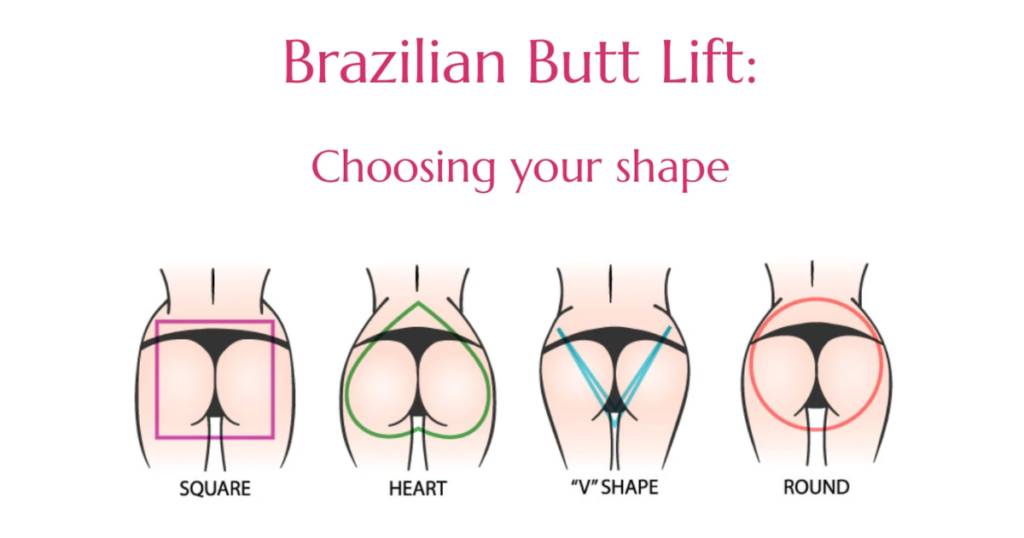
A liquid BBL, also known as a non-surgical BBL, is a buttock-contouring treatment that uses injectable filler to add selected volume, improve shape and adjust contour without liposuction or surgical fat transfer. Results are temporary, and how long a liquid BBL lasts can vary depending on the filler used, treatment volume, metabolism, activity, anatomy and individual treatment plan.
The term BBL can describe both surgical and non-surgical procedures, but they are not the same treatment. A surgical Brazilian butt lift transfers a patient’s own fat after liposuction, while a liquid BBL uses injectable filler. The two approaches differ in treatment method, recovery, expected results, longevity and recognised risks.
At Deep Aesthetics, non-surgical BBL treatment is offered using filler rather than surgical fat transfer. Treatment is available in London Canary Wharf and Birmingham, with a current package price of £2,995 for up to 560ml. The final volume and treatment plan are determined according to individual anatomy, goals, medical history and suitability.
In this guide, we explain what a liquid BBL is, how long it may last, how it differs from a surgical BBL, expected results, recovery, risks, filler volumes and current Deep Aesthetics pricing.
What Is a Liquid BBL?
A liquid BBL, sometimes called a non-surgical BBL or filler-based BBL, uses injectable filler to alter buttock volume and contour. It does not involve liposuction or surgical fat transfer.
Depending on anatomy and the agreed treatment plan, filler may be used to:
- Add selected volume
- Improve contour
- Address visible asymmetry
- Increase upper or lateral fullness
- Create subtle to moderate projection
- Restore some volume following ageing or weight change
The Deep Aesthetics service page describes its procedure as using hyaluronic acid filler. The amount used can be adjusted according to the volume, shape and areas being considered.
A filler-based BBL should not be viewed simply as a smaller version of surgical BBL surgery. The material, procedure, scale of possible change, recovery profile, longevity and complications are different.
Non-surgical also does not mean risk-free. Injectable filler can carry recognised risks including infection, lumps or nodules, filler migration, tissue injury and vascular complications.
How Long Does a Liquid BBL Last?
Liquid BBL results are temporary. There is no single duration that applies to every patient because longevity can vary according to the injectable product, treatment volume, metabolism, physical activity, anatomy and individual response.
Some patients may consider maintenance or additional treatment as the effect gradually changes over time. The expected duration should therefore be discussed using information relating to the exact product being proposed rather than relying on a guaranteed universal timeline.
The amount of filler used may also influence the treatment plan, but more filler does not automatically mean a longer-lasting or better result. Volume should be selected according to anatomy, tissue capacity, goals and the practitioner’s assessment.
Deep Aesthetics’ current Liquid BBL treatment information notes that results and duration vary between clients, so an individual consultation remains important when discussing expected longevity.
Liquid BBL vs Surgical BBL
Although both procedures may be described using the term BBL, a surgical Brazilian butt lift and a liquid BBL use fundamentally different approaches.
| Feature | Surgical BBL | Liquid BBL |
| Material used | Patient’s own fat | Injectable filler |
| Fat removal | Liposuction required | No liposuction |
| Incisions | Surgical incisions | Injection or cannula entry points |
| Anaesthesia | Usually surgical anaesthesia | Depends on treatment and clinic protocol |
| Typical result | Potentially larger-volume change | Usually subtle to moderate contour change |
| Recovery | Surgical recovery involving donor and treatment areas | Usually shorter, but not necessarily zero downtime |
| Longevity | Can last for years but changes with ageing and weight | Temporary and dependent on product and patient |
| Reversibility | Transferred fat cannot simply be dissolved | Some HA fillers may be treated with hyaluronidase, but complete or immediate reversal cannot be guaranteed |
| Main risks | Fat embolism, bleeding, infection, wound problems and anaesthetic complications | Infection, lumps, migration, vascular complications, tissue injury and inflammatory reactions |
Neither option is automatically appropriate for every patient.
Suitability depends on the desired amount of change, available donor fat, overall health, existing anatomy, recovery tolerance, expectations and individual risk assessment.
How Does a Surgical BBL Work?
A surgical Brazilian butt lift generally involves several stages:
- A plastic surgeon assesses the patient, their health and the amount of available donor fat.
- Fat is removed from areas such as the abdomen, flanks, hips or thighs using liposuction.
- The removed fat is processed.
- Selected fat is transferred into the buttock area.
- Recovery involves both the liposuction areas and the fat-transfer site.
The procedure may therefore change more than the buttocks. Removing fat from surrounding areas can also alter the waist, hips or thighs and affect the overall silhouette.
Not all transferred fat remains permanently. Some may be reabsorbed during healing, and the eventual appearance may also change with ageing or significant weight fluctuation.
A surgical BBL is a major cosmetic procedure with potentially serious complications, including fat embolism.
What Can a Liquid BBL Change?
A liquid BBL may be used to alter:
- Buttock volume
- Projection
- Upper or side fullness
- Symmetry
- Contour
- Proportion with the waist, hips or thighs
A filler-based BBL may suit someone seeking a selected contour change without liposuction, but it may not create the same scale of volume change as surgical fat transfer.
It also cannot guarantee a particular celebrity body shape or an exact predetermined result. Results are limited by anatomy, tissue quality, treatment volume and what can reasonably be achieved without creating unnecessary risk.
Exercise may develop the gluteal muscles, but it does not reproduce the effects of transferring fat or placing filler. Patients comparing alternative ways to reshape specific areas can also review Deep Aesthetics’ other body-contouring treatment options.
How Does a Liquid BBL Work?
The exact process varies, but the general patient journey may include:
- Consultation and medical-history review
- Assessment of shape, proportions, asymmetry and goals
- Discussion of the proposed product, volume, expected change and recognised risks
- Preparation and appropriate pain management
- Controlled filler placement
- Immediate assessment and aftercare guidance
- Follow-up when clinically appropriate
Appointment length and discomfort can vary according to the volume used, treatment plan and individual response.
A consultation should also establish exactly which filler is being proposed, why it is being used for that area and what plans are in place if a complication occurs.
For larger or more complex contour changes, treatment planning may also consider whether a staged approach is more appropriate rather than attempting to create the full change in a single appointment.
What Results Can You Expect from a Liquid BBL?
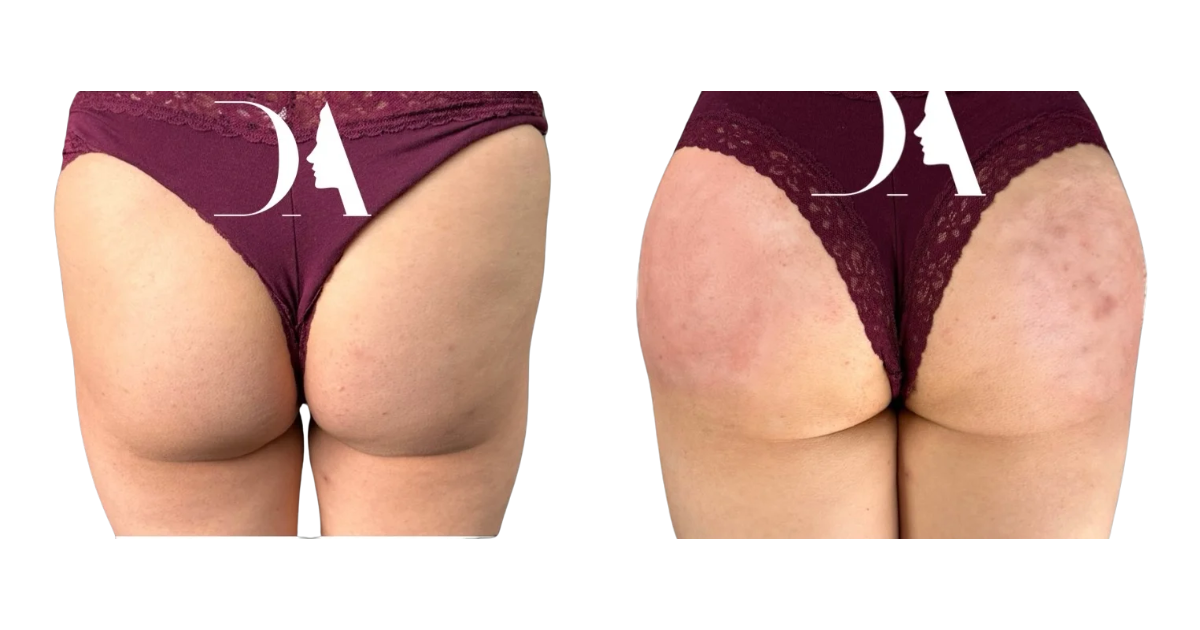
Changes from filler placement may be visible soon after treatment, although initial swelling can affect how the area looks.
Possible changes include:
- Increased fullness
- A rounder contour
- Improved symmetry
- Selected projection
- Better balance with surrounding body contours
The final result should not be judged while significant swelling remains.
The amount of change depends on the patient’s starting anatomy, filler volume and agreed treatment plan. More filler does not automatically create a better or safer outcome.
Some patients may consider maintenance or further treatment later. Longevity depends on the product, volume, metabolism, activity, anatomy and individual treatment plan.
This is why both the expected cosmetic change and likely duration should be discussed individually rather than guaranteed in advance.
Recovery and Aftercare After a Liquid BBL
A filler-based procedure usually has a different recovery profile from surgical fat transfer, but it can still cause short-term effects.
These may include:
- Swelling
- Bruising
- Tenderness
- Redness
- Firmness
- Temporary unevenness while swelling settles
Recovery may depend on the product used, treatment volume, placement, individual healing and whether a complication develops.
Follow the personalised aftercare instructions provided by the treating clinic. Patients should also be given clear information about expected early changes, pressure on the treated area, activity and when to contact the clinic.
Contact the clinic promptly if symptoms become increasingly severe rather than gradually settling.
What Are the Risks of a Liquid BBL?
Both surgical and filler-based BBL procedures carry risks. Their complications are different, but either procedure can potentially cause serious harm.
Liquid BBL Risks
Possible filler-related risks include:
- Swelling, bruising and pain
- Infection or abscess
- Lumps or nodules
- Filler migration
- Inflammatory or allergic reactions
- Uneven contour
- Vascular blockage
- Skin or tissue damage
- Need for medical or corrective treatment
- Serious systemic complications in rare cases
A rare but serious concern with injectable filler is unintended involvement of a blood vessel, which may interfere with blood supply and cause tissue injury or other complications.
Seek urgent medical assessment for severe or rapidly worsening symptoms, unusual skin-colour changes, signs of serious infection, breathing difficulty, collapse or neurological symptoms.
Surgical BBL Risks
Possible surgical risks include:
- Fat embolism
- Blood clots
- Bleeding
- Infection
- Fat necrosis
- Fluid collection
- Wound-healing problems
- Unevenness or asymmetry
- Anaesthetic complications
- Revision surgery
- Severe complications in rare cases
One of the most serious recognised risks associated with surgical fat transfer is pulmonary fat embolism, which may occur if transferred fat enters the circulation and travels to the lungs.
Who May Not Be Suitable for a Liquid BBL?
Treatment may need to be postponed or avoided where there is:
- Active infection or damaged skin in the treatment area
- A relevant allergy or previous filler reaction
- A bleeding or clotting disorder
- Certain immune or healing conditions
- Relevant medicine use
- Pregnancy or breastfeeding
- A significant untreated medical condition
- An inability to follow aftercare
- Expectations that cannot reasonably be met
Body-image concerns may also require careful assessment before cosmetic treatment is considered.
This is not a complete contraindication list. Patients should disclose their medical history, medicines, allergies and previous cosmetic procedures during consultation.
Suitability should be determined individually rather than from online information alone.
How Much Does a Liquid BBL Cost at Deep Aesthetics?
Deep Aesthetics currently displays the following Liquid BBL filler pricing:
| Deep Aesthetics BBL Option | Filler Volume | Displayed Price |
| Current BBL filler package | Up to 560ml | £2,995 |
| Standard / previous displayed price | Up to 560ml | £4,000 |
The £2,995 amount is the current displayed package price, while £4,000 is shown as the standard or previous price. The same figures are currently displayed on Deep Aesthetics’ dedicated Liquid BBL treatment information.
This does not mean that every patient will require or be suitable for 560ml. Prices and offers can change, and the final volume, treatment areas and treatment plan should be confirmed during consultation.
For a more detailed pricing breakdown, see the Deep Aesthetics guide to non-surgical BBL cost in the UK.
Liquid BBL Treatment at Deep Aesthetics
At Deep Aesthetics, the clinic offers filler-based non-surgical buttock augmentation in London Canary Wharf and Birmingham.
Treatment planning considers:
- Existing anatomy and proportions
- Desired cosmetic change
- Medical history
- Previous procedures
- Proposed filler product
- Appropriate treatment volume
- Expected results and limitations
- Recognised risks
- Recovery and aftercare
An individual consultation is necessary to establish whether the procedure is appropriate and what result can reasonably be expected.
Patients looking specifically for treatment information by location can review the dedicated Liquid BBL London and Liquid BBL Birmingham pages.
Deep Aesthetics offers the filler-based option rather than surgical fat transfer, so the consultation focuses on whether non-surgical contour enhancement is suitable for the patient’s anatomy and goals.
Final Thoughts: Is a Liquid BBL Right for You?
A liquid BBL is a non-surgical buttock-contouring treatment that uses injectable filler rather than surgical fat transfer. It may be used to add selected volume, improve shape, address asymmetry or adjust contour, but the result is temporary and varies between individuals.
How long a liquid BBL lasts depends on factors such as the product used, filler volume, anatomy, metabolism, activity and individual response. A specific duration should therefore not be guaranteed for every patient.
The procedure also carries recognised risks, so suitability, expected results, treatment volume, aftercare and possible complications should be discussed before treatment.
At Deep Aesthetics, Liquid BBL consultations and treatment are available in London Canary Wharf and Birmingham. Contact the clinic for an individual assessment and personalised treatment plan.
Disclaimer: This article is for general informational purposes only and does not constitute medical advice. Surgical and non-surgical BBL procedures carry risks, and suitability, products, treatment volume, results, longevity, recovery, prices and complications vary between individuals. An individual assessment with an appropriately qualified healthcare professional is required before undergoing treatment.
Frequently Asked Questions
What is a liquid BBL?
A liquid BBL is a non-surgical buttock-contouring procedure that uses injectable filler instead of liposuction and fat transfer. Filler may be used to add selected volume, improve contour, alter projection or address visible asymmetry depending on the treatment plan.
How long does a liquid BBL last?
No guaranteed duration applies to every Liquid BBL. Longevity depends on factors including the product, filler volume, metabolism, activity, anatomy and individual treatment plan. Maintenance or further treatment may be considered after review.
Is a liquid BBL the same as a surgical BBL?
No. A surgical BBL involves liposuction and transfer of the patient’s own fat into the buttocks. A liquid BBL uses injectable filler and does not involve surgical fat harvesting. The procedures also differ in recovery, expected scale of change, longevity and risks.
Is a liquid BBL safe?
A liquid BBL should not be described as completely safe or risk-free. Recognised risks include swelling, bruising, pain, infection, lumps, migration, uneven contour, tissue injury and vascular complications. Suitability, product choice, proposed volume, risks and complication management should be discussed before treatment.
How much filler is used for a liquid BBL?
There is no single filler volume that is suitable for every patient. The amount required depends on starting anatomy, treatment areas, desired contour change, tissue characteristics and clinical assessment.
Deep Aesthetics currently advertises a package of up to 560ml, but this does not mean every patient requires or is suitable for the maximum volume.
Can liquid BBL filler be dissolved?
Where a confirmed hyaluronic acid filler has been used, hyaluronidase may sometimes be considered where clinically appropriate. However, dissolving treatment has its own risks, and complete or immediate removal cannot be guaranteed.
How much does a liquid BBL cost at Deep Aesthetics?
Deep Aesthetics currently displays a Liquid BBL package price of £2,995 for up to 560ml, with a standard or previous displayed price of £4,000. Final treatment volume, suitability and pricing should be confirmed during consultation.
Where does Deep Aesthetics offer liquid BBL treatment?
Deep Aesthetics provides Liquid BBL consultations and treatment at its Canary Wharf, London clinic and Birmingham clinic. Location-specific information is available on the dedicated London and Birmingham Liquid BBL pages.
