
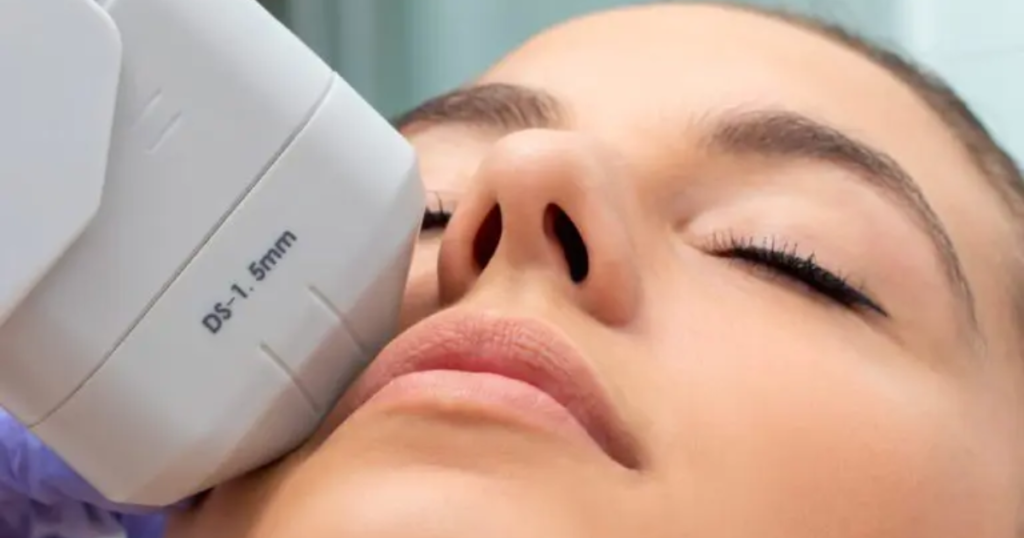
How long does HIFU last, and should you expect the result to disappear after a few months? The answer depends partly on the difference between when the treatment starts working, when the result becomes most visible and how gradually it fades.
How long does HIFU last? HIFU results are temporary and usually develop gradually, with fuller changes often assessed around three months. How long they remain visible varies according to the device, treatment area, skin laxity, age, collagen response, lifestyle and treatment plan. A fixed lifespan or maintenance interval cannot be guaranteed.
Patients may confuse immediate tightness, early collagen-related changes, the more developed result, overall longevity and maintenance. A feeling of firmness immediately after treatment is not necessarily the final outcome.
At Deep Aesthetics, HIFU facial treatment is offered for selected skin-tightening concerns. Its live page says full results are generally seen around three months after completing a course, but it does not publish a guaranteed duration. Response and maintenance therefore require individual assessment.
In this guide, we explain when HIFU results may appear, how long they can remain noticeable, what affects longevity, when maintenance may be considered and why the treatment cannot provide permanent or surgical-level results.
How Long Does HIFU Last?
HIFU effects are temporary. They do not appear at one precise moment or disappear on one exact date.
Deep Aesthetics states that full results are generally seen around three months after a course. That describes result development, not the total lifespan of the result.
Published aesthetic-ultrasound literature commonly assesses results after several months, but findings relating to one device cannot automatically be applied to every HIFU machine or treatment protocol. Focused-ultrasound devices differ in energy delivery, treatment depth, settings and supporting clinical evidence.
Visible improvement may remain for several months, and some device-specific research follows results for six months or longer. However, a fixed duration cannot be promised. The device, treatment area, starting laxity, age, biological response, session plan and continuing ageing can all influence longevity.
HIFU Results Timeline
| Stage | What may happen |
| Immediately after treatment | Temporary tightness, redness, swelling or tenderness may affect the appearance |
| First few weeks | Early changes may begin, but the final result should not be judged |
| Around two to three months | Collagen remodelling may make tightening or contour changes more noticeable |
| Around three months | Deep Aesthetics says full results are generally seen around this point after completing a course |
| Following months | The result may remain noticeable before gradually becoming less visible |
| Later review | Maintenance should follow reassessment of the skin, result and treatment history |
This is a general guide rather than a guaranteed schedule. Some people may notice an earlier change, while others may experience a subtler or slower response.
The three-month point should not be misunderstood as the date when the result ends. Deep Aesthetics uses it to describe when fuller results may be visible after a course.
Why Do HIFU Results Take Time to Develop?
Cosmetic HIFU delivers focused ultrasound energy beneath the skin to create controlled thermal effects. This response may stimulate tissue contraction and collagen remodelling rather than producing an instant volumising effect. Clinical reviews describe focused ultrasound as an energy-based approach capable of heating selected tissue and inducing collagen-related remodelling.
Collagen remodelling is gradual. Early swelling or temporary firmness may also influence how the area looks immediately after treatment.
A review after several weeks or around three months may therefore be more useful than judging the result after a few days.
HIFU systems are not identical. Deep Aesthetics does not identify the exact device, manufacturer or model used on its live page, so claims relating to a specific branded system should not be attributed to the clinic.
What Affects How Long HIFU Results Last?
The exact device and treatment protocol
“HIFU” is a broad term. Devices may differ in energy delivery, available settings, treatment planning and clinical evidence.
Deep Aesthetics mentions Ultherapy as a well-known HIFU brand, but it does not say that its own treatment uses an Ultherapy device.
Starting skin laxity
Deep Aesthetics describes HIFU as more suited to mild-to-moderate skin laxity. More advanced sagging may produce a subtler response or require discussion of different treatment options.
Suitability cannot be determined from age or appearance alone. Skin quality, facial structure and previous procedures may also influence the assessment.
Age and collagen response
Age, skin condition and individual biology may affect how quickly collagen remodelling develops and how visible the change becomes.
No particular age guarantees a stronger or longer-lasting result. Two people receiving similar treatment may respond differently.
Treatment area
The face, jawline, neck and décolletage have different anatomy and may not produce identical results or timelines.
Claims relating to body HIFU should not automatically be applied to facial HIFU.
Treatment course
Deep Aesthetics refers to completing a course of HIFU but does not publish a universal number of sessions.
The recommended number and spacing of treatments should depend on the device, area, starting laxity, previous procedures and clinical assessment. A three-session course should not be assumed.
Ongoing ageing and lifestyle
HIFU cannot stop ageing. Skin structure and facial contours continue to change after treatment.
Sun exposure and smoking may contribute to skin ageing, while substantial weight changes may alter facial contours. These factors may influence how the result appears, but lifestyle alone does not determine whether treatment succeeds.
Does HIFU Wear Off?
HIFU does not usually switch off suddenly.
The visible effect generally becomes less noticeable gradually as ageing continues, collagen changes over time and skin laxity progresses. Changes in facial volume or body weight may also affect the treated area.
This gradual fading can make it difficult to identify one exact date when the treatment “stopped working”.
A subtle result may also be less obvious over time because you see your face every day. Standardised photographs and clinical reassessment can be more helpful than relying only on memory.
Is One HIFU Session Enough?
There is no session number that is right for everyone.
Some people may be offered one treatment, while others may be advised to have a course or later maintenance. The plan may depend on:
- The device used
- The area being treated
- Starting skin laxity
- Previous aesthetic procedures
- Response to earlier treatment
- Side effects or complications
- Realistic treatment goals
Deep Aesthetics’ page refers to a course but does not state how many appointments it contains.
More sessions do not automatically produce a better result. Frequent repeat treatment should not be encouraged without reassessing the skin and previous response.
When Should HIFU Maintenance Be Considered?

Maintenance should follow an individual review rather than a fixed calendar promise.
A practitioner may consider:
- How much improvement developed
- Whether the effect has started to fade
- Current skin condition
- The previous treatment date
- The device and protocol used
- Previous side effects
- Whether repeating HIFU is appropriate
Some clinics discuss reassessment within approximately six to twelve months, but this is not a compulsory schedule or a guarantee that every patient needs annual treatment.
Maintenance also cannot be guaranteed to extend results by a particular number of months.
Can You Make HIFU Results Last Longer?
No skincare routine or lifestyle change can guarantee that HIFU results will last longer.
Reasonable general measures may include following personalised aftercare, using sun protection, avoiding smoking, maintaining a relatively stable weight and attending follow-up when advised.
Unnecessary or overly frequent energy-based treatments should be avoided. More treatment is not automatically safer or more effective.
Topical skincare may improve hydration and surface appearance, but it cannot be assumed to reproduce or preserve the deeper effects of focused ultrasound.
HIFU Results Compared with Other Skin-Tightening Treatments
HIFU differs from surgery, radiofrequency procedures, laser resurfacing, minimally invasive laser treatments, thread lifts and injectable treatments.
Each option has a different mechanism, recovery profile, expected scale of change and risk profile. Readers comparing non-surgical skin tightening treatments should focus on suitability and realistic outcomes rather than assuming one method is universally better.
HIFU does not generally create the same scale or durability of change as surgical lifting. It should not be described as equivalent to a facelift.
Side Effects, Risks and Result Longevity
Possible short-term effects may include:
- Redness
- Swelling
- Tenderness
- Tingling
- Bruising
- Temporary numbness
Deep Aesthetics lists mild redness, swelling and tingling among possible immediate effects, and its page says these commonly settle quickly. However, immediate return to normal activity should not be guaranteed for every patient, and more general energy-based treatment literature also describes bruising and temporary numbness as possible reactions, even where a specific clinic’s page does not list them.
More serious unwanted outcomes reported with improperly selected or delivered energy-based treatment may include burns, persistent pain, nerve symptoms, unwanted fat loss, uneven contour or scarring. Device choice, settings, anatomy and practitioner technique may affect risk.
People researching longevity also commonly ask, “is HIFU painful?” Sensation and recovery vary, and discomfort should be explained separately from how long the result may remain visible.
Who May Not Be Suitable for HIFU?
Treatment may be unsuitable or postponed for people with factors such as:
- Active infection or damaged skin
- Certain implanted devices or metal in the proposed area
- Relevant neurological conditions
- Relevant bleeding or healing conditions
- Pregnancy
- Significant untreated medical conditions
- Severe laxity that may require surgical assessment
- Expectations that cannot reasonably be achieved
- Recent treatments that affect planning
This is not a complete contraindication list.
Disclose medicines, implants and previous procedures, including surgery, fillers, threads, lasers, radiofrequency and earlier HIFU treatments.
HIFU Treatment at Deep Aesthetics
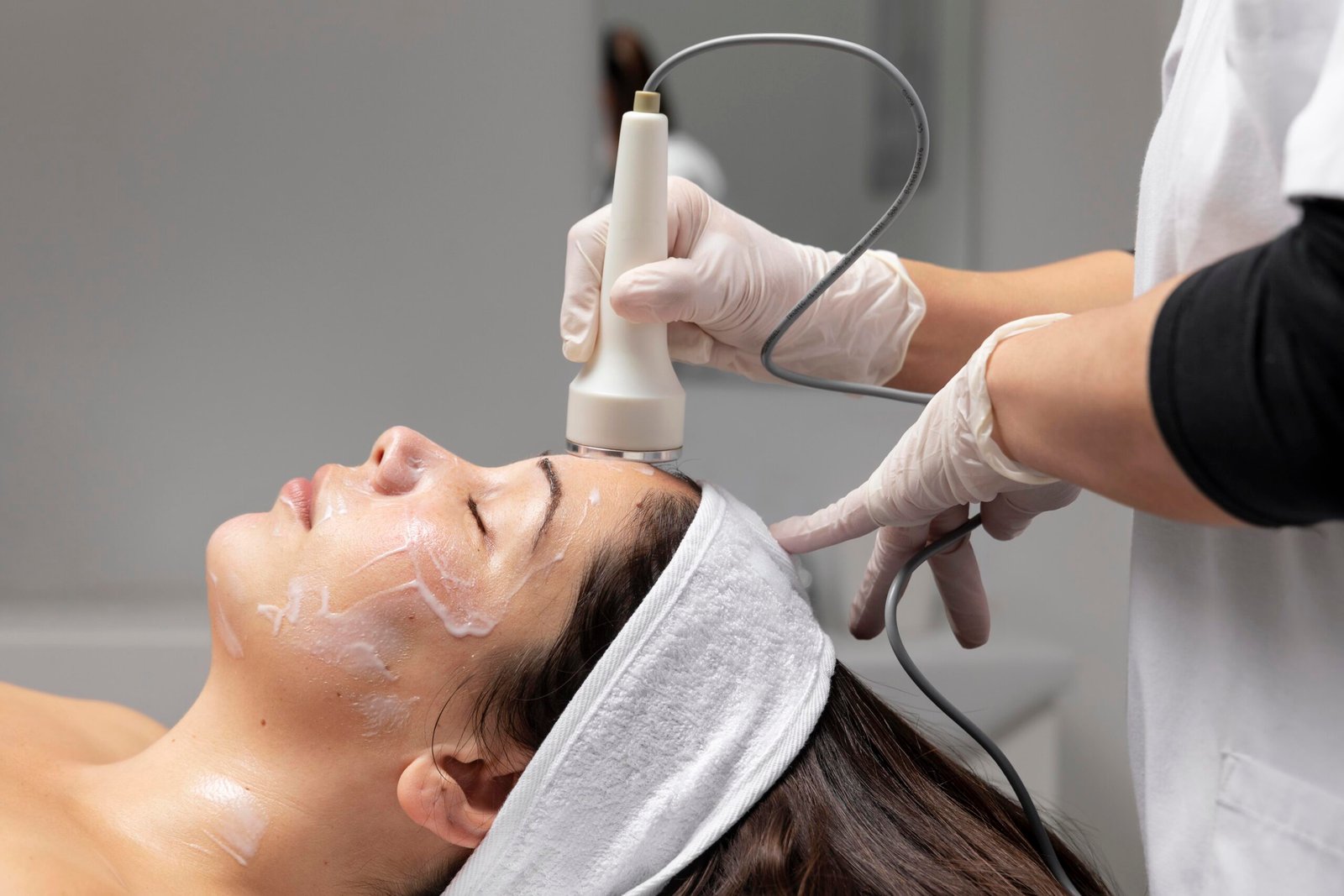
At Deep Aesthetics, HIFU is offered as a non-surgical skin treatment intended to tighten, smooth and firm selected areas.
The live page says full results are generally seen around three months after completing a course. It does not publish a guaranteed lifespan, identify the exact device or confirm a universal course length.
A consultation should establish the proposed treatment area, device, session plan, expected limitations, risks and appropriate review timing.
Conclusion: How Long Can You Expect HIFU Results to Last?
How long does HIFU last? The result is temporary, develops gradually and does not have one guaranteed lifespan.
Deep Aesthetics says fuller results are generally seen around three months after completing a course. That is a result-development point, not a claim that the treatment lasts only three months.
Visible changes may remain for several months before fading gradually, but longevity varies between patients, devices, treatment areas and protocols.
Maintenance should follow individual reassessment rather than a fixed timetable. HIFU may provide a subtle non-surgical change for an appropriately selected patient, but it does not offer the scale or durability of surgery.
Deep Aesthetics offers HIFU treatment, and a consultation is required to confirm the device, course, expected result, risks and review plan.
Disclaimer: This article is for general informational purposes only and does not constitute medical advice. HIFU suitability, device, treatment course, results, duration, maintenance, recovery and complications vary between individuals. An assessment with an appropriately qualified healthcare professional is required before treatment.
Frequently Asked Questions
How long does HIFU last on the face?
Facial HIFU results are temporary. Improvement may remain noticeable for several months, but there is no universal lifespan. Duration varies according to the device, treatment area, starting laxity, age, collagen response, previous procedures and individual treatment plan.
When do HIFU results peak?
Results develop gradually. Deep Aesthetics states that full results are generally seen around three months after completing a course. This is an approximate assessment point rather than a guarantee that every patient’s result will peak on the same day.
Is HIFU permanent?
No. HIFU is not permanent and cannot stop ageing. A visible tightening effect may develop gradually and remain noticeable for a period, but it generally becomes less apparent as skin and facial contours continue to change.
How often should you have HIFU?
There is no universal schedule. Repeat treatment should follow assessment of the previous result, device, treated area, skin condition and any side effects. Annual treatment should not be treated as automatically necessary for every patient.
Does HIFU work after one session?
Some people may be offered one treatment, while others may be advised to have a course or later maintenance. The appropriate plan depends on the device, area, starting laxity, previous procedures and individual response.
