
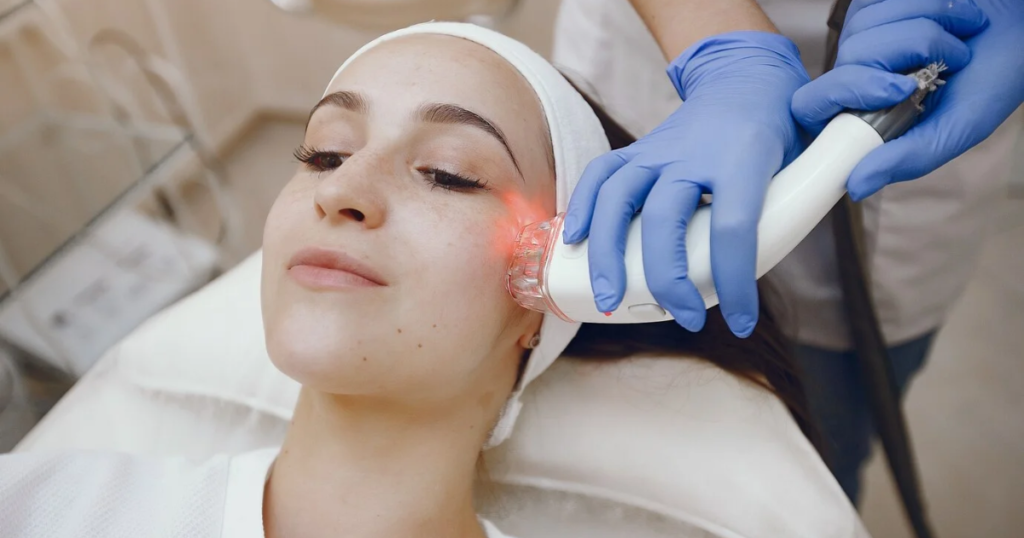
Does laser hair removal work, or does the hair simply grow back after treatment? Laser can provide meaningful long-term hair reduction. However, the outcome depends on several factors. These include hair colour, skin tone, treatment area, device, treatment plan and the cause of hair growth.
Does laser hair removal work? Yes, it can provide long-term hair reduction for many suitable patients, particularly when the hair contains enough pigment and the device is appropriate for the skin tone. Multiple sessions are normally needed because follicles grow in cycles. Complete, permanent removal of every hair cannot be guaranteed.
It is important to distinguish between hairs shedding after treatment, an early reduction after one appointment, progressive improvement across a course and long-term reduction. Some regrowth does not automatically mean the treatment has failed.
At Deep Aesthetics, laser hair removal treatment is offered at the listed London Canary Wharf and Birmingham clinics. The service page describes long-term reduction after multiple sessions and currently displays £7 for underarms and £89 for full body and face. Prices may change, and suitability requires individual assessment.
In this guide, we explain how laser targets hair, when results may become visible, why multiple appointments are needed, what affects effectiveness and why long-term reduction is different from guaranteed permanent removal.
Does Laser Hair Removal Work?

Laser hair removal can work well for long-term hair reduction when the hair contains enough target pigment, the selected device is appropriate for the skin tone and the treatment settings and appointment plan are suitable.
The treatment does not guarantee:
- Removal of every hair
- Permanently hair-free skin
- Identical results on every body area
- Equal effectiveness for every hair colour
- Equal results for every skin tone
- Complete results after one appointment
Medical sources describe the outcome as a substantial reduction or delay in future hair growth rather than a promise that hair will never return. Several treatments are normally required, and follow-up appointments may occasionally be considered.
How Does Laser Hair Removal Reduce Hair?
Laser light is absorbed by melanin, the pigment within the hair. The absorbed light is converted into heat, which damages selected structures within the follicle and can slow future growth.
The skin around the hair also contains melanin. This means the wrong device or settings can cause skin damage. Skin tone and recent tanning both affect how safe and effective the treatment is.
The follicle must also be in a responsive growth stage. Because different follicles enter that stage at different times, one appointment cannot target every hair effectively.
When Do Laser Hair Removal Results Start?
| Stage | What you may notice |
| Immediately after treatment | Hair may remain visible, while redness or swelling may temporarily affect the area |
| Following days and weeks | Some treated hairs may loosen and shed rather than disappearing instantly |
| After the first session | A partial reduction may become noticeable, but one appointment is not a complete course |
| Across later sessions | Regrowth may become slower, patchier, finer or less dense |
| After the recommended course | A more meaningful long-term reduction can be assessed |
| Later months or years | Some regrowth may occur, and maintenance may be considered individually |
Hair does not necessarily fall out immediately. Mayo Clinic notes that treated hairs commonly shed over several days to weeks, while the American Academy of Dermatology says results vary according to hair colour, thickness, treatment area, laser type and skin colour.
This timeline is only a general guide. Results may develop at different rates, and the absence of instant shedding does not by itself show that the treatment has failed.
Why Are Multiple Sessions Needed?
Hair follicles move through different growth stages. Laser works best when a follicle enters the active growth phase, but all follicles are not active simultaneously.
Repeated appointments allow different groups of active hairs to be targeted over time. Medical organisations publish different general course estimates, which demonstrates why no clinic should promise a universal session number. The appropriate number depends on the device, area, hair characteristics and individual response.
Although laser hair removal session time also varies according to the size of the treatment area, appointment length should not be confused with the number of treatments needed.
What Does a Successful Result Look Like?
A realistic response may include:
- Fewer visible hairs
- Slower regrowth
- Finer or lighter regrowth
- Patchier hair growth
- Less frequent shaving
- Longer intervals before regrowth becomes noticeable
Not every patient experiences every change. Standardised photographs taken in similar lighting can make it easier to assess progress than relying on memory alone.
The treatment should be judged by the overall reduction across a properly planned course, not solely by whether a few hairs return.
Which Hair Colours Respond Best?
Laser relies on pigment as its target. Dark, coarse hair commonly responds more predictably because it contains more melanin.
Brown and black hair therefore tend to respond better than hair with very little pigment. Blonde, white and grey hair generally respond less effectively, while red hair may also respond less predictably because its pigment absorbs laser energy differently. Very fine hair can be more difficult to treat.
These are general patterns rather than guarantees. Dark hair does not ensure success, and a proper assessment is still required.
Does Laser Hair Removal Work on Darker Skin Tones?

Darker skin tones can be treated, but the exact device, settings, cooling method and practitioner’s experience are particularly important.
Both the hair and surrounding skin contain melanin. With more pigment in the skin, inappropriate technology or settings can increase the risk of burns and lasting colour changes. Mayo Clinic states that laser treatment can be performed on Black and brown skin when it is delivered by an experienced professional using an appropriate approach.
Not every laser is suitable for every skin tone. Deep Aesthetics does not identify its exact device on the live service page, so no specific laser type or wavelength should be assumed.
What Affects How Well Laser Hair Removal Works?
Hair colour and thickness
Darker, coarser hairs usually provide a clearer pigment target. Very fine or low-pigment hairs may absorb insufficient energy for a strong response.
Skin tone and tanning
Natural skin tone, recent sun exposure and artificial tanning may affect device selection, settings and the risk of pigment changes. Tanned skin can make treatment less effective and increase the likelihood of unwanted effects.
The device used
Different lasers have different characteristics. Intense pulsed light, or IPL, is also a light-based technology but is not technically the same as a laser.
Results from one device should not automatically be applied to another. The exact system and its suitability should be confirmed during consultation.
Treatment area
Leg, underarm and bikini hair may respond differently from facial or hormonally influenced hair. Each area has different growth patterns, hair density and proportions of active follicles.
Hormonal influences
Hormonal conditions or life stages can stimulate continuing or new hair growth. Examples may include polycystic ovary syndrome, menopause, pregnancy-related changes, thyroid disorders and certain medicines.
Laser may reduce existing responsive hair, but it does not treat the underlying hormonal cause. New growth may therefore continue even when treated hairs have responded.
Course completion
Irregular attendance, stopping early or removing hairs from the root between appointments may interfere with the planned treatment course.
The appropriate timing should be set by the treating clinic rather than through a rigid self-treatment schedule.
Why Might Laser Hair Removal Appear Not to Be Working?
Possible explanations include:
- Too few appointments have been completed
- Results are being judged too early
- Different follicles are entering active growth at different times
- The hair is too light or fine to provide a strong target
- The device or settings may not be suitable
- Appointments have been irregular
- Hair has been waxed or plucked between treatments
- Hormonal factors are stimulating new growth
- The selected area responds more slowly
Regrowth is not always evidence of complete treatment failure. A clinical review can help determine whether the hair is becoming finer, lighter, slower or less dense.
Is Laser Hair Removal Permanent?
Laser hair removal is better described as long-term hair reduction than guaranteed permanent removal.
Some follicles may be substantially damaged, but hairs can return over time. Regrowth may be finer, lighter or less dense, and maintenance may be considered for some patients. Hormonal changes and previously inactive follicles can also produce new growth.
Our separate guide explains how long laser hair removal lasts without treating maintenance as a fixed annual requirement.
Does Laser Hair Removal Work Better Than Shaving or Waxing?
Shaving cuts hair at skin level, while waxing removes it temporarily from the root. Neither method aims to damage the follicle and reduce future growth.
Laser targets pigmented follicles to reduce regrowth over time, but it requires a course of treatment and cannot guarantee that every hair will disappear.
Waxing or plucking during a laser course may remove the hair that needs to be present as a treatment target. Shaving is generally treated differently because it leaves the follicle beneath the skin.
For a separate pricing discussion, see our guide to laser hair removal cost in the UK.
Safety, Side Effects and Effectiveness
Safety and effectiveness are closely connected because inappropriate device selection or settings can affect both the result and the risk of skin injury.
Common short-term effects may include redness, swelling, mild irritation and temporary discomfort. Other possible complications include blistering, burns, infection, scarring, pigment changes, changes in skin texture, herpes reactivation and unwanted increased hair growth around a treated area.
A dedicated article on laser hair removal safety will cover contraindications and risks in more depth. Sensation also varies by treatment area and individual response; our guide to does laser hair removal hurt covers that question separately.
Who Should Seek Further Assessment Before Treatment?
Additional assessment may be needed for people with:
- Active infection or damaged skin
- Recent tanning or significant sun exposure
- Medicines that increase light sensitivity
- A history of abnormal scarring
- Active herpes in the proposed area
- Previous pigment problems
- Pregnancy
- Tattoos within the treatment area
- Unexplained or sudden excessive hair growth
- A suspected hormonal condition
- A history of skin cancer
- Expectations of guaranteed permanent removal
This is not a complete contraindication list. Medical history, medicines, previous reactions and recent procedures should be disclosed before treatment.
Laser Hair Removal at Deep Aesthetics
At Deep Aesthetics, laser hair removal is offered for unwanted facial and body hair. The live service page explains that outcomes vary according to skin type, hair colour and treatment area, and describes significant reduction after multiple sessions rather than guaranteed complete removal.
The website lists London Canary Wharf and Birmingham locations and currently displays area-based prices, including:
- Underarms: £7
- Full face: £30
- Any bikini: £18.50
- Full body and face: £89
Prices and promotional offers may change. The exact device, appropriate treatment course and likely response should be confirmed during consultation.
Conclusion: Does Laser Hair Removal Really Work?
Does laser hair removal work? Yes, it can provide meaningful long-term hair reduction for many suitable patients.
It does not guarantee complete permanent removal, and multiple appointments are usually required because follicles pass through different growth stages.
Effectiveness depends on hair colour, thickness, skin tone, treatment area, device, settings, course completion and hormonal influences. Some regrowth may occur even after a good response.
Deep Aesthetics offers laser hair removal with area-based pricing, but the appropriate device, treatment plan and expected outcome require individual assessment.
Disclaimer: This article is for general informational purposes only and does not constitute medical advice. Laser hair removal suitability, device selection, treatment course, effectiveness, results, maintenance, recovery and complications vary between individuals. An assessment with an appropriately qualified professional is required before treatment.
Frequently Asked Questions
Does Laser Hair Removal Work After One Session?
One session may produce an early or partial reduction, but it cannot target every follicle because hairs enter the active growth phase at different times. A meaningful result is usually assessed across an individually planned course rather than after one appointment.
How Long Does Laser Hair Removal Take to Work?
Some changes may become noticeable after the first treatment, and treated hairs may shed over the following days or weeks. A fuller reduction generally develops progressively across multiple appointments. There is no universal course length for every patient or body area.
Does Laser Hair Removal Work on Blonde, Red, Grey or White Hair?
These hair colours generally respond less predictably because they contain less of the pigment targeted by the laser, or a different pigment profile. Effectiveness depends on the exact hair colour, thickness, device and individual assessment.
Does Laser Hair Removal Work on Dark Skin?
It can work on darker skin, but appropriate technology, settings, cooling and practitioner experience are especially important. Not every device is suitable for every skin tone, so an assessment is needed before treatment.
Can Hair Grow Back After Laser Hair Removal?
Yes. Some hair can return months or years later. Regrowth may be finer, lighter or less dense, but hormonal influences and previously inactive follicles can contribute to new growth. Maintenance may be discussed for some patients.
