
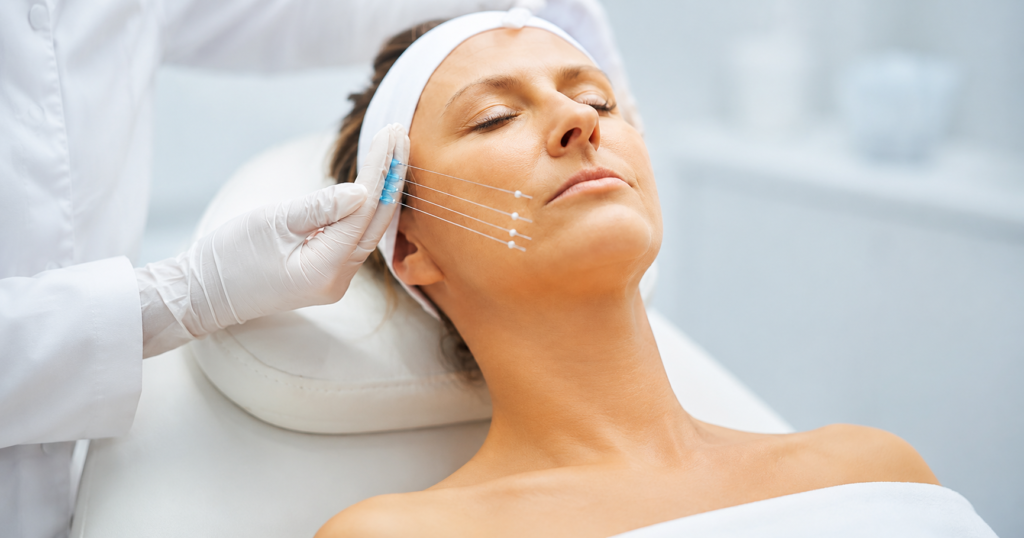
Endolaser has no fixed expiry date, but it does have a usable timeline. Results develop gradually over three to six months as collagen remodels, and in clinical practice the improvement generally remains visible for around 12 to 24 months before normal ageing and weight change become the dominant influence.
That range is a practical guide, not a proven figure. The clearest published follow-up comes from a 2026 preliminary facial Endolaser study in which eight patients were photographed at six months and monitored monthly for a year. A 2025 scoping review of the wider literature specifically named long-term sustainability as an unanswered question.
So any clinic promising “three years guaranteed” is going beyond what the evidence supports. At Deep Aesthetics we discuss longevity in terms of your anatomy, the area treated and what is actually causing the concern – not a countdown.
This guide covers when Endolaser treatment results appear, how long they realistically stay visible, what shortens them, and whether you need maintenance.
When Do Endolaser Results Develop?
What you see immediately after treatment is not the result.
Swelling peaks at around 48 to 72 hours and settles over 7 to 14 days, and only once that resolves does the actual change become assessable. Endolaser creates controlled thermal effects beneath the skin, and where a tissue-remodelling response occurs, collagen continues to reorganise for months afterwards.
A realistic timeline:
- Weeks 1–2 – swelling and bruising settle; the area may feel firm or uneven
- Weeks 3–6 – early contour change becomes visible as residual swelling clears
- Months 3–6 – the fuller result develops as collagen remodels
- Month 6 onward – this is the point at which the outcome should be reviewed
Result development and result longevity are two different questions, and they get conflated constantly. Improvement can still be building at month four while the clock on durability has already started.
Study protocols differ in wavelength, fibre size and area treated, so a timeline reported in one paper will not map exactly onto your treatment. For how the procedure itself works, see our guide to what Endolaser is and how it works.
Are Endolaser Results Permanent?
No, and they should not be described that way. Where localised fat is treated, thermal effects on fat cells in that area may be long-lasting – but the surrounding fat, your weight and your body composition all keep changing, so the appearance of the contour is not fixed even where the tissue change is.
Where skin laxity is treated, the position is clearer still: collagen turnover continues, elastin degrades with age, and facial fat compartments shift. The treated area keeps ageing along with everything around it.
The honest framing is that Endolaser resets the starting point rather than freezing it.
What Affects How Long Endolaser Results Last?
Treatment area. Facial, neck and body tissues differ in thickness, movement, fat distribution and age-related change. Neck and jawline results are affected by constant movement in a way that a flatter body area is not. Longevity does not transfer between areas.
Starting skin condition. More significant laxity at the outset usually means a smaller proportionate change and a shorter window before the concern becomes noticeable again. Better baseline skin quality tends to hold a result longer.
Weight change. This is the single biggest modifiable factor. Where localised fat contributed to the original concern, gaining or losing weight afterwards changes both the treated area and the tissue around it.
Age and rate of ageing. Endolaser does not slow ageing. A patient in their late thirties will typically hold a result longer than someone in their sixties treating the same area.
Underlying anatomy. Bone structure, fat compartments and soft-tissue distribution keep influencing contour after treatment. If anatomy was a major part of the original concern, an energy treatment was only ever addressing part of it.
Individual biological response. People remodel tissue differently. Two patients treated identically can differ in both the degree and durability of the response.
Sun exposure and skin care. UV damage degrades collagen. It will not undo a contour change, but it affects how the skin above it looks over time.
Do Skin-Tightening and Fat Results Last the Same Way?
No, and combining them into one longevity figure is misleading.
Skin laxity results are influenced by the treatment response and by continued ageing running against it. The change is gradual in both directions – it builds over months, then softens over months.
Localised fat results behave differently. The contour change in a treated area can hold well provided weight stays reasonably stable, but subsequent weight gain can alter the appearance considerably, including in surrounding untreated areas.
This is also why Endolaser should not be described as liposuction. It is a laser-based treatment that may be considered for selected skin-laxity and localised fat concerns, not a surgical fat-removal procedure. If a small isolated fat pocket is the whole concern, fat dissolving injections may be the simpler option.
Does Endolaser Stop the Ageing Process?
No. Collagen, elastin, fat distribution and bone all continue to change after treatment.
It is worth being precise about what this means, because “wearing off” is the wrong mental model. The treatment does not switch off on a particular date. The treated area simply continues to change alongside the rest of your face or body, and at some point the difference from your starting point becomes less obvious.
That is a gradual process, which is why patients rarely notice a moment when the result “ends”.
Do You Need Maintenance Endolaser Treatments?
There is no evidence-based maintenance interval, and no reason to book a repeat by calendar.
A practical approach: review at around 12 months. By then the result has fully developed and you can judge whether the original concern has returned enough to warrant discussion. Before that, you would be assessing a result that is still settling.
Whether a second treatment is appropriate depends on:
- how the area responded the first time
- whether the concern has actually changed
- your current anatomy and skin condition
- what you want to achieve now
- whether Endolaser is still the right tool, or whether something else fits better
Some patients never return. Others come back after a year or two for reassessment. Neither is unusual. What matters is that the second decision is made on a fresh assessment, not on the assumption that treatment must be repeated.
Can You Help Your Results Last Longer?
Nothing guarantees a specific lifespan, but some things genuinely help:
- Keep your weight reasonably stable. This matters most where fat distribution contributed to the concern, and it is the factor with the largest effect.
- Protect the skin from UV. Daily SPF is the single most evidence-backed thing you can do for collagen preservation.
- Follow the aftercare you were given. In the first weeks, aftercare affects how well the tissue settles, which affects the result you end up with.
- Don’t ignore unexpected problems. Contact the clinic rather than waiting, if something does not seem to be settling as described.
These support general skin health. They are not a way to guarantee a treatment lifespan, and should not be sold as one.
Does Endolaser Last Longer Than HIFU or Morpheus 8?
Comparisons here are less clean than the marketing suggests, because the three treatments are not doing the same thing.
Endolaser typically produces a more definite change in a single session, which usually means a longer window before the concern is noticeable again. HIFU produces a subtler change and is often repeated annually. Morpheus 8 builds over three sessions and is frequently maintained with periodic single sessions.
Longevity alone is a poor basis for choosing. What matters is which treatment addresses the tissue causing your concern – see our full comparison of Endolaser vs HIFU vs Morpheus 8.
When Might Another Treatment Be More Appropriate?
Longevity should not be the deciding factor.
If you have substantial loose skin, a surgical procedure offers a different degree of correction and no energy device is a substitute. If you are seeking major fat reduction, you need an approach designed for that. And in many cases the concern is driven mainly by underlying anatomy – bone structure or chin projection – where jawline and chin contouring addresses the cause rather than the symptom.
The questions worth asking before treatment:
- What is actually causing this concern?
- Can Endolaser realistically address it?
- What degree of improvement is reasonable for my anatomy?
- Are the recognised risks acceptable to me?
- Is there an alternative better matched to the goal?
Choosing the option advertised as lasting longest, without answering those first, tends to end in disappointment.
Endolaser at Deep Aesthetics
Consultations are available at our London and Birmingham clinics.
London: Mirror Works, 12 Marshgate Lane, Stratford, London E15 2NH
Birmingham: 25 King Edwards Wharf, Sheepcote Street, Birmingham B16 8AB
Endolaser starts from £995 per session for face or neck – see the full cost breakdown. Consultation covers anatomy, treatment area, current skin condition, realistic expectations and recognised risks before longevity is discussed. Book a consultation.
Frequently Asked Questions
Question: How long does Endolaser last?
Endolaser results develop over three to six months as collagen remodels, and in clinical practice generally remain visible for around 12 to 24 months before ageing and weight change become dominant. No published study establishes a definitive figure, so treat any guaranteed number with caution.
Question: Are Endolaser results permanent?
No. Skin continues to age and body contour changes with weight fluctuation. Where localised fat was treated, the change in that area can be long-lasting, but the surrounding tissue and your overall body composition keep changing. Current research does not establish lifetime durability.
Question: How long until I see Endolaser results?
Swelling settles over 7 to 14 days, early change becomes visible from around three to six weeks, and the fuller result develops over three to six months. Assessing your outcome before three months usually means judging it too early.
Question: Can weight gain change Endolaser results?
Yes, and this is the largest factor within your control. Weight change alters facial and body contour, particularly where localised fat was part of the original concern. How noticeable that is varies between individuals.
When should I consider another Endolaser treatment?
A reassessment at around 12 months is reasonable, once the result has fully developed. There is no universal maintenance schedule, and suitability should be reconsidered at each consultation rather than assumed.
Does Endolaser last longer than HIFU?
Endolaser generally produces a more definite change in one session, so the window before the concern returns tends to be longer, while HIFU is subtler and often repeated annually. The better question is which treatment suits the tissue causing your concern.
Conclusion
Endolaser results develop over three to six months and typically remain visible for around 12 to 24 months, after which continued ageing and weight change gradually become the stronger influence.
That range reflects clinical experience rather than proven data. The published literature remains limited – the 2025 scoping review found only 26 papers on aesthetic Endolaser and named long-term sustainability as an area needing further study – so no responsible clinic can promise an exact duration.
How long your own result stays visible depends on the area treated, your starting skin condition, your anatomy, your individual response, your rate of ageing and any weight change. A consultation should focus on what Endolaser can realistically achieve for your specific concern rather than on a longevity promise.
Disclaimer: This article provides general information only and does not constitute medical advice. Endolaser suitability, outcomes, longevity, risks and recovery vary between individuals and treatment areas. An individual assessment with an appropriately trained and experienced practitioner is required before treatment.
